



CQ | Polarization and AI Bubbles: How Algorithms Are Changing Our Reality
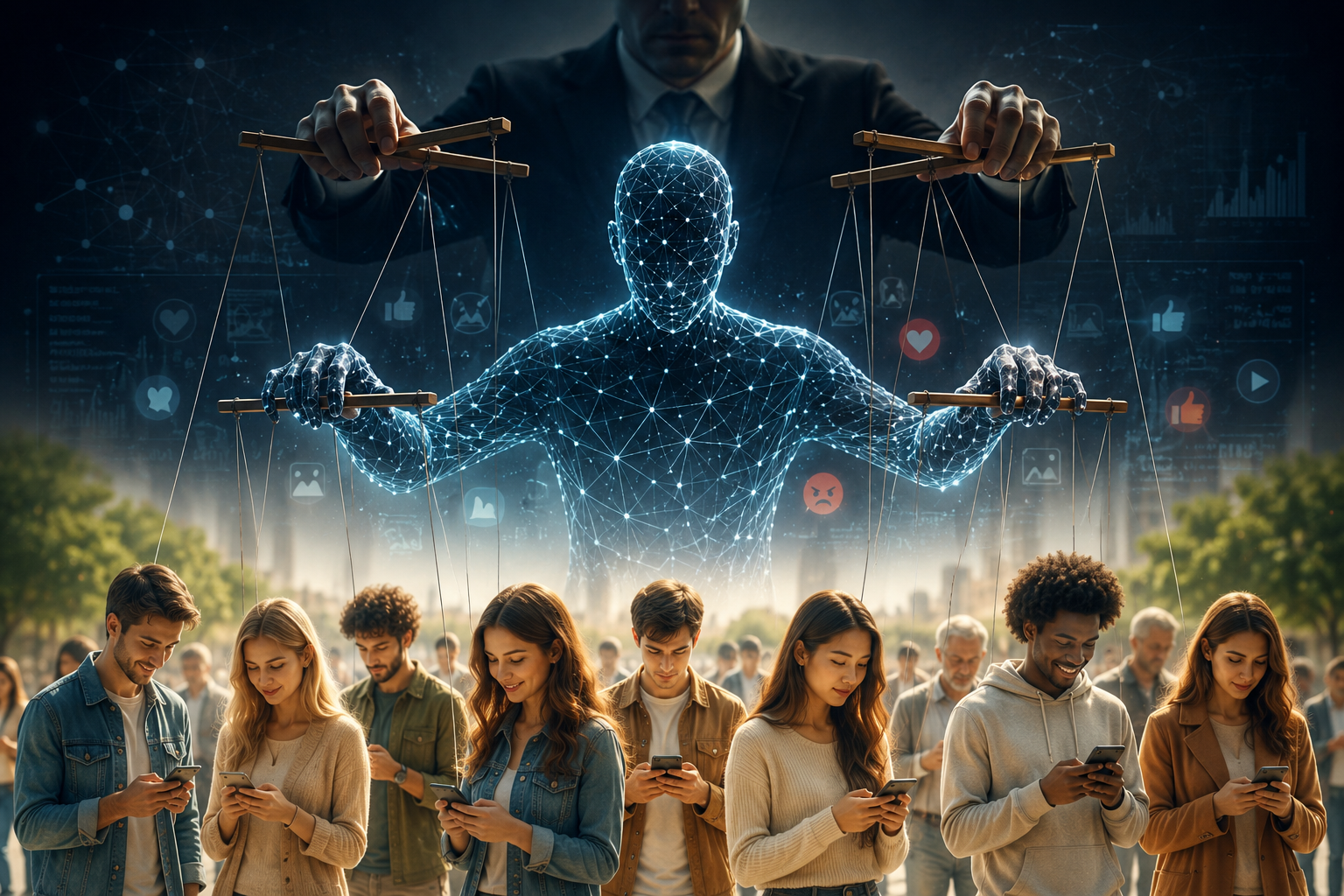
⚡ Reper CorpQuants: Algorithms do not create polarization; they optimize objectives set by humans. When success is measured by engagement, profit, or influence, cognitive vulnerabilities become resources to exploit. AI ethics is not just about smarter algorithms, but also about the responsibility of those who decide which behaviors these systems should maximize.
Introduction: The echo chamber we live in
Every day, millions of people follow world news and events through social media. The paradox is that two users opening the app at the same time may see completely different versions of the same reality. One receives information that confirms their beliefs, while the other sees opposing arguments or even different facts. This is not a coincidence, but the result of how AI-powered recommendation algorithms select and personalize content.
This phenomenon is known as the filter bubble, and its most visible effect is the polarization of society. Instead of facilitating dialogue and the exchange of ideas, digital platforms risk turning the public space into a collection of echo chambers, where everyone only hears their own beliefs.
How Algorithms Construct Our Own Reality
Modern recommendation algorithms constantly analyze user behavior: what they read, what they like, how long they watch a video, what they share, and what they comment on. From this information, they build an extremely detailed profile of each person’s preferences.
The main goal is not to inform the user accurately, but to maximize the time spent on the platform. The longer a user stays connected, the more ads the platform can display and the greater the revenue.
That’s why algorithms tend to offer content similar to what has already caught the user’s attention. If someone interacts with radical opinions, conspiracy theories, or highly emotional content, the system will consider these relevant and will recommend more and more similar materials.
Over time, informational diversity decreases, and the user comes to believe that their own perspective represents the majority opinion.
Why does it work so well?
Algorithms do not invent human emotions; they simply learn very quickly what stimulates them. Numerous studies have shown that emotions such as outrage, anger, or fear generate high levels of interaction. Comments, shares, and heated debates signal to the algorithm that this content should be promoted.
The result is a vicious circle:
- emotional content produces more engagement;
- the algorithm distributes it to more users;
- reactions increase even more;
- the content becomes increasingly visible.
- Thus, platforms end up promoting not necessarily the most accurate information, but the information that generates the most reactions.
- Human psychology – the true fuel of algorithms
- The success of these systems is due not only to technological performance but also to the fact that they exploit psychological mechanisms that have evolved over thousands of years and unconsciously influence our decisions.
- Confirmation bias leads us to seek out and more easily accept information that confirms our existing beliefs, ignoring contrary arguments. Algorithms quickly detect these preferences and constantly feed the same perspective.
- Negativity bias is the brain’s tendency to pay more attention to negative information than to positive. From an evolutionary perspective, quickly identifying dangers was essential for survival. Today, this mechanism makes alarming news, conflicts, and scandals capture attention much more effectively than balanced information.
- Variable reward, similar to mechanisms found in gambling, contributes to compulsive use of social platforms. The user never knows when the next interesting video or notification will appear, and this uncertainty stimulates the brain’s reward system and keeps them scrolling.
- Emotional contagion causes strong emotions to spread rapidly among users. Anger, outrage, or fear generate more comments and shares than neutral messages, and algorithms interpret these reactions as a signal that such content should be promoted to an even wider audience.
- All these psychological mechanisms evolved to help us survive. In the digital age, however, they have become optimization points for recommendation algorithms.
When Algorithms Are Designed to Influence
From an ethical perspective, the problem is not that algorithms understand human psychology, but that the people who design them deliberately choose to use these cognitive vulnerabilities to achieve certain objectives. These objectives may be commercial, such as maximizing time spent on the platform and advertising revenue, but they can also be political or ideological, when influencing public opinion becomes a source of power.
The algorithm does not independently decide that anger, fear, or confirmation of one’s own beliefs should be amplified. These are the consequences of design choices, where the system’s success is measured in engagement, influence, and the ability to shape user behavior.
The Cambridge Analytica scandal demonstrated how valuable the combination of psychological profiling with recommendation algorithms and political microtargeting can become. The personal data of millions of users were used to send different messages to different categories of voters in an attempt to influence their opinions and voting behavior. Although the exact impact on the Brexit referendum or other elections remains a matter of debate, the case showed that algorithms can become tools for exerting political influence, not just generating profit.
Algorithms have no interests of their own. They faithfully pursue the objectives set by their creators. If the goal is to maximize time spent on the platform, they will exploit any psychological vulnerability to achieve it. If the goal is to influence public opinion, they will use the same mechanisms to shape perceptions and behaviors. The ethical issue is not the intelligence of the algorithm, but the human intention it executes.
Case Studies: When Algorithms Influenced the Real World
1. Cambridge Analytica and Political Microtargeting
In 2018, the Cambridge Analytica scandal demonstrated how powerful the combination of personal data and profiling algorithms can become. The company used information collected from millions of Facebook users to build psychographic profiles and deliver personalized political messages tailored to the vulnerabilities and preferences of each group.
2. TikTok – the algorithm that learns the user in a few hours
The TikTok algorithm analyzes watch time, pauses, replays, likes, and shares to quickly build a user profile. In just a few hours, the content feed becomes highly personalized, which can accelerate the formation of informational bubbles.
3. YouTube and the “rabbit hole” effect
For years, YouTube has been criticized for the fact that its recommendations could lead users toward increasingly radical or conspiratorial content. Although recent research shows the phenomenon is more complex than initially believed, it confirms that recommendations can limit informational diversity and reinforce existing beliefs.
Ethical Dilemmas
Erosion of a Shared Truth
A society functions when its citizens share at least a minimal set of common facts. When each community receives its own information feed, “parallel truths” emerge. People no longer debate different interpretations of the same facts, but start from different realities.
Behavioral Manipulation
Few users consciously choose the information they consume. In practice, algorithms decide the order, frequency, and type of content displayed. Repeated exposure to the same types of information can change perceptions, priorities, and even political or social beliefs.
The ethical question is simple: how free is our choice when our information environment is constantly shaped by an algorithm?
Responsibility of Technology Companies
Digital platforms claim that algorithms only pursue relevance for the user. Critics argue, however, that the attention economy business model rewards precisely the content that provokes strong emotions and division.
Is it acceptable for profit, influence, or power to be gained by amplifying social conflicts and exploiting users’ cognitive vulnerabilities? This is one of the most important ethical questions of the AI era.
Can we escape the bubble?
There is no single solution, but there are promising directions.
At the technological level, researchers propose algorithms that do not exclusively optimize time spent on the platform, but also aim for informational diversity. So-called Bridging Algorithms attempt to deliberately introduce different perspectives, reducing informational isolation.
At the individual level, each user can contribute to their own informational balance:
- deliberately consulting sources with different perspectives;
- fact-checking information before sharing;
- limiting recommendations based on personal history;
- occasionally using independent searches or incognito mode to reduce excessive personalization.
- These actions do not completely eliminate the effect of algorithms, but they reduce their influence on how we perceive the world.
Conclusion
Recommendation algorithms do not create polarization from scratch. They amplify existing human tendencies and optimize what most effectively captures our attention. The problem arises when the objectives set by the creators of these systems conflict with society’s interest in maintaining a public space based on dialogue, diversity, and critical thinking.
The future depends not only on the performance of algorithms, but also on the values by which we choose to design them. A healthy society needs not only smart technologies, but also people who design responsible systems and users capable of seeking different perspectives and questioning their own beliefs. In the AI era, the most important skill is not to receive more information, but to learn to step outside our own bubble.
(This material was assisted by an AI tool and reviewed by our team before publishing).