-

How Reinforcement Learning Can Revolutionize Risk Management: Practical Applications and Benefits for Organizations
Reinforcement learning brings an adaptive and dynamic approach to risk management, providing organizations with tools to simulate scenarios and optimize decisions. Integrating RL allows for continuous evaluation of risk indicators and alignment of incentives with control objectives, transforming how companies manage uncertainty.
-

Who Checks the Default Settings of AI Models? 5 Hidden scikit-learn Pitfalls for Business (in Plain English)
Default settings in AI models may seem like technical details, but they can have a major impact on business outcomes. Discover 5 common pitfalls in scikit-learn and how you can prevent unpleasant surprises, even if you’re not a technology expert.
-
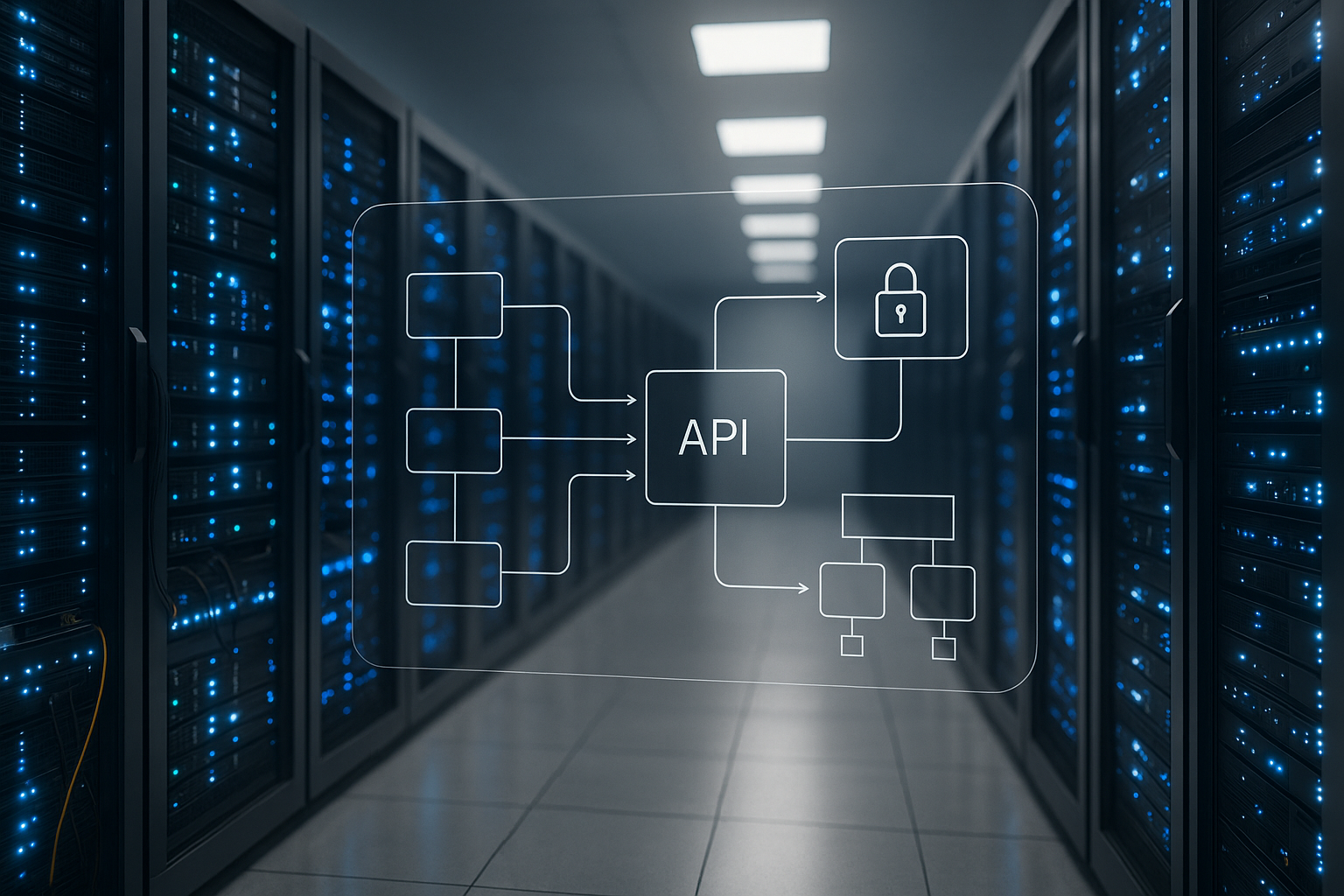
From Model to Value: How to Turn an AI Model into a Useful Business Service
A high-performing AI model does not guarantee business success if it is not efficiently integrated into organizational processes. The article explores the difference between experimentation and implementation, technical and operational challenges, as well as practical steps to turn AI into a valuable business service.
-

How Robots Learn New Tasks from a Single Demonstration: The GEN-1.5 Revolution Explained Simply
GEN-1.5 is a new technology that allows robots to quickly learn new tasks from a short demonstration, without additional programming. This paves the way for more accessible and flexible automation, both for businesses and everyday life. Robots thus become easier to use and adapt to our needs.
-

Tabular LLMs: How Foundation Models Can Revolutionize Business Data Analysis
Tabular LLMs can automatically interpret and complete tabular data without additional training, surpassing classical machine learning methods. These models open new possibilities for automating analysis and reporting in business, integrating AI directly into popular tools like Excel or Power BI. A true revolution for professionals working with data.
-

How to Use AgentTrove: Advanced Analysis of AI Interactions with Python and Open Data
AgentTrove provides fast access to the largest open-source agentic dataset, enabling large-scale analysis of AI interactions. Using Python, professionals can process and extract valuable insights to optimize conversational agents and automated processes. This article presents concrete techniques and practical business applications.
-
Why Gradient Descent Became Stochastic: The Evolution of Optimization in Machine Learning
Classic Gradient Descent is no longer sufficient for training AI models on large datasets. Stochastic Gradient Descent (SGD) has become the industry standard due to its efficiency, scalability, and superior performance. The choice of optimization method directly influences the success of modern Machine Learning projects.
-

Python 3.14 and the JIT Compiler: The Performance Leap for AI and Data Analytics
Python 3.14 introduces a native JIT Compiler, delivering a major performance boost for AI, machine learning, and data analytics projects. The article explores practical benefits, benchmarks, and recommendations for adopting this version in professional and educational settings.
-

What Hardware Should You Choose for AI? Essential Guide for Professionals and Managers
Choosing the right hardware for AI/ML decisively influences the performance, costs, and scalability of your projects. Understand the differences between CPU, GPU, TPU, and NPU to make informed and effective decisions. This guide helps you navigate the essential hardware options for AI success.
office@corpquants.ro
+40 727 437 050
Caderea Bastiliei 14