



CQ | GPT-Red: The AI Super-Hacker from OpenAI Redefining LLM Security
⚡ Reper CorpQuants: Automating red-teaming with AI models like GPT-Red significantly raises security standards for LLMs and offers a scalable way to identify risks, surpassing the limitations of purely human approaches.
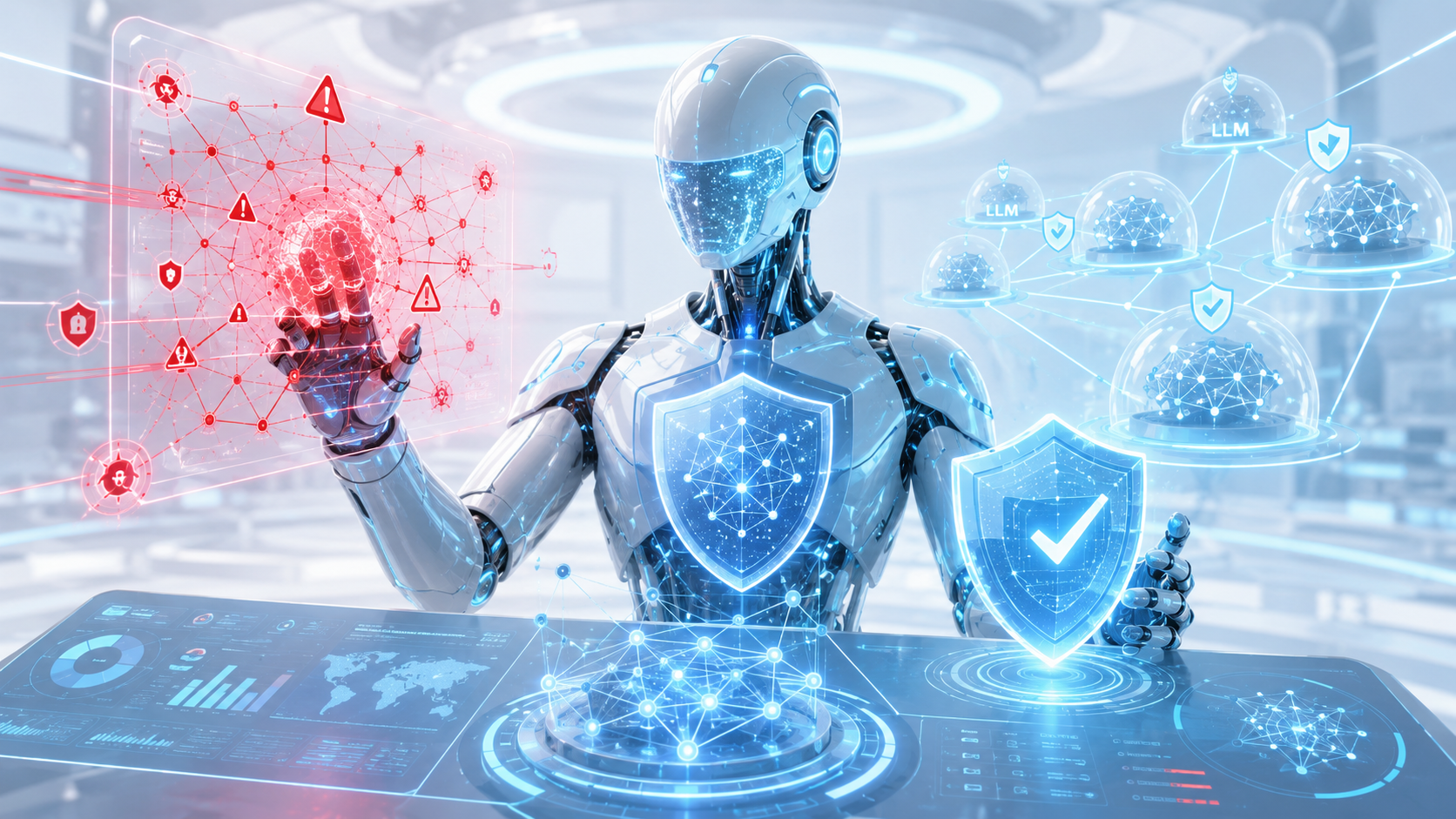
What happens when an AI becomes the best hacker of another AI? OpenAI has created GPT-Red, a model capable of finding vulnerabilities where human teams have failed. This revolutionary step not only raises security standards for LLM models, but also fundamentally changes the way we manage risks in artificial intelligence.
As large language models (LLMs) become increasingly present in the digital infrastructure of companies and institutions, ensuring their security is becoming a critical priority. GPT-Red marks a new milestone in testing and defending AI systems against sophisticated attacks, demonstrating that artificial intelligence can be used not only to build, but also to protect other AI systems.
Why AI Model Security Is Becoming Critical
The accelerated adoption of artificial intelligence models, especially LLMs (Large Language Models), has brought significant benefits in automation, data analysis, and user interactions. However, this rapid expansion has also exposed new attack surfaces, and vulnerabilities such as prompt injection or context manipulation can have major consequences for the confidentiality, integrity, and reliability of AI systems.
In this context, continuous and advanced testing of AI model resilience is no longer optional, but a strategic necessity for any organization using these technologies.
Traditional Red-Teaming vs. Automated Red-Teaming with AI
Red-Teaming: From Human Teams to AI Super-Hackers
Red-teaming is the process by which security experts attempt to identify and exploit a system’s vulnerabilities, simulating real attacks to assess its resilience. Traditionally, this activity was carried out by specialized human teams who designed complex attack scenarios and tested the limits of AI systems.
However, as models become more sophisticated, possible attacks are increasingly difficult to anticipate and comprehensively cover by humans. This is where GPT-Red, the model developed by OpenAI, comes in, automating and amplifying the defensive testing process. GPT-Red was specially trained to generate and execute prompt injection attacks, simulating attacker behaviors with a level of creativity and efficiency hard for human teams to match.
Advantages of Automated Red-Teaming
- Scalability: An AI model can generate and test thousands of attack scenarios in parallel, far exceeding human capacity.
- Algorithmic Creativity: AI models can discover attack patterns unexplored by humans, thanks to the large volume of data and variation in prompt generation.
- Reduced Time and Costs: Automation enables rapid identification of vulnerabilities, reducing development cycles and costs associated with manual testing.
Practical Implications for Risk Management and AI Development
Integrating models like GPT-Red into the development and audit processes of AI systems fundamentally changes the security paradigm:
- Continuous Testing: AI models can be subjected to simulated attacks non-stop, ensuring dynamic risk assessment throughout the product lifecycle.
- Reducing Reliance on Limited Human Expertise: Organizations can overcome the shortage of AI security specialists by using automated models to cover a wider range of risk scenarios.
- Improved Time-to-Market: Rapid identification of vulnerabilities allows for safer and faster launches of AI products, with reduced risk of post-deployment exploitation.
The Future of Testing and Security in the AI Era
GPT-Red marks the beginning of a new era in AI security, where models must be not only high-performing but also resilient to sophisticated attacks. As AI becomes an integral part of organizations’ critical processes, automated defensive testing will become the industry standard.
In conclusion, collaboration between AI and human experts in red-teaming promises to raise the safety level of AI systems to unprecedented standards, transforming the way companies manage risks and innovate responsibly.
(This material was assisted by an AI tool and reviewed by our team before publishing).