


CQ | Can AI Chatbots Change Government Decisions? Risks and Solutions for Transparency
⚡ Reper CorpQuants: AI chatbots can subtly or directly influence government decisions, and without rigorous regulation and auditing, the risks of bias and lack of transparency can undermine democratic processes.
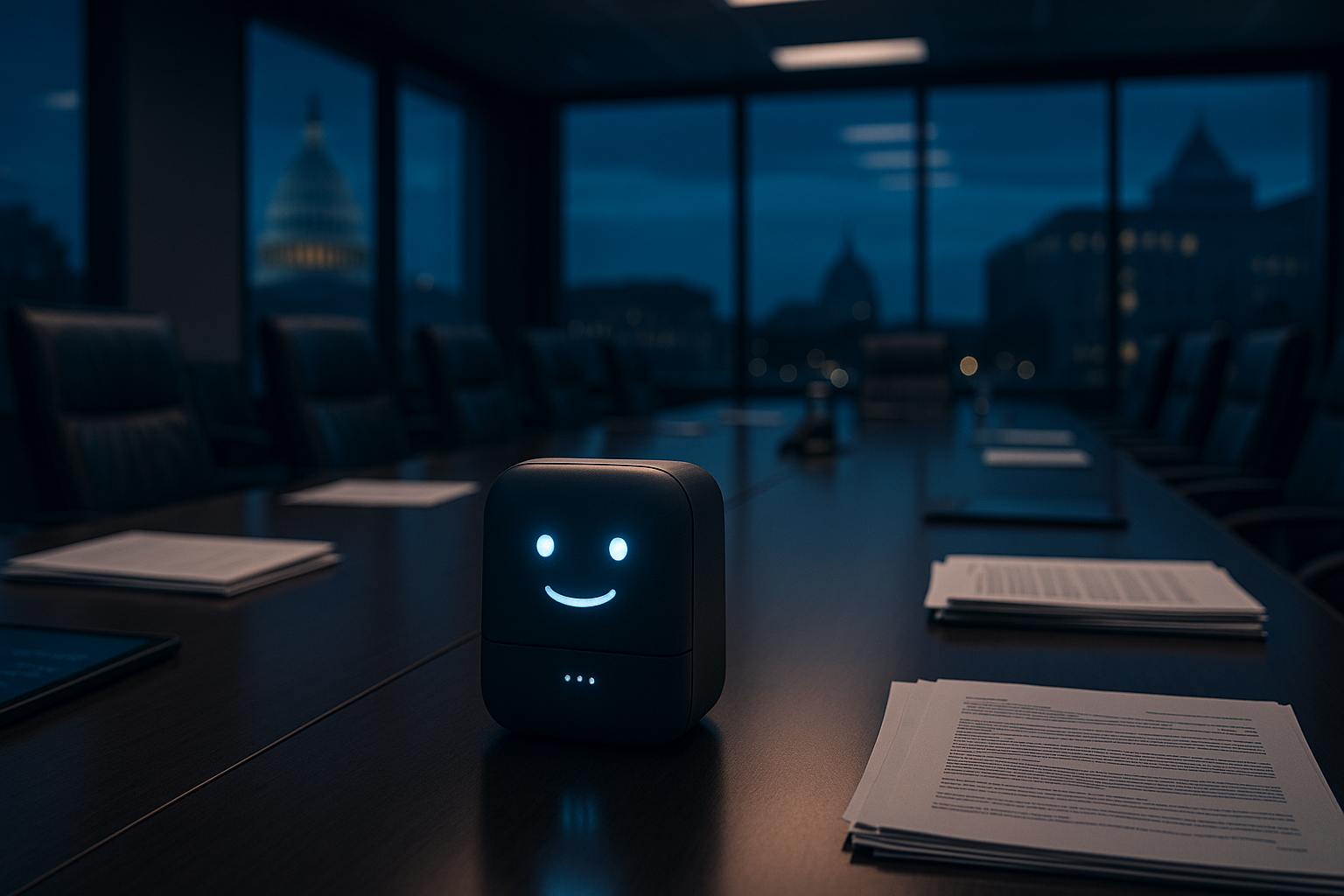
Imagine a scenario where crucial government decisions are influenced by the recommendations of an AI chatbot. How transparent and ethical is this process?
As public administrations increasingly adopt artificial intelligence, the risks of bias, manipulation, and lack of accountability become a real challenge for democracy. In the context of mounting pressure for efficiency and digitalization, the question is no longer whether AI will be used in government, but how we can ensure that this technology serves the public interest rather than undermining it.
Why Do Governments Use AI Chatbots?
Governments around the world are exploring the use of AI chatbots to streamline administrative processes, provide citizen support, and assist policymakers with relevant information. These systems can analyze huge volumes of data, synthesize reports, and generate recommendations that would traditionally require entire teams of experts. In the context of pressure for digitalization and reducing bureaucracy, AI becomes an attractive tool for modernizing public administration.
At the same time, AI chatbots can act as intermediaries between citizens and authorities, facilitating access to information and government services. However, when these systems become advisors to political leaders, their influence on decisions increases significantly.
Context and Current Trends: Recent Examples and Developments
In recent years, several public administrations have begun experimenting with conversational AI. For example, in Estonia, chatbots assist officials in handling citizen requests, while in the UK, there are pilot initiatives for using AI to analyze the impact of public policies. In the US, some federal agencies already use AI systems to prioritize projects or assess risks in real time.
These initiatives demonstrate the potential of AI to transform public administration, but also the need for a critical reflection on the ethical and social implications.
Practical Implications: Risks for Transparency, Bias, and Manipulation
1. Lack of Transparency
One of the greatest risks associated with using AI chatbots in government is the opacity of the decision-making process. Algorithms can generate recommendations without users (including policymakers) fully understanding the logic behind them. Without transparency, it becomes difficult to identify the source of a decision or to hold the involved actors accountable.
2. Algorithmic Bias
AI is only as objective as the data and algorithms that power it. Bias can arise from the selection of training data, the way questions are formulated, or the system’s design. In a governmental context, this can lead to the perpetuation of inequalities or the favoring of certain groups, even unintentionally.
- Decisions regarding resource allocation can be influenced by historical biases.
- AI recommendations may reflect the preferences of developers or technology providers.
3. Manipulation of the Democratic Process
A major risk lies in the possibility that AI could be used to manipulate political decisions, either through biased recommendations or by hiding certain options. In the absence of control mechanisms, chatbots could become tools of undemocratic influence, undermining the responsibility and autonomy of political leaders.
Conclusion: The Need for Regulation and Auditing of AI in Public Administration
As AI becomes an integral part of governmental decision-making, it is essential to establish clear standards for transparency, ethics, and accountability. Regulation of AI chatbot use must include:
- The obligation for periodic external audits of the algorithms used.
- Publication of the criteria on which AI generates recommendations.
- Involvement of independent experts and civil society in assessing AI’s impact on public policies.
Ultimately, AI can bring real benefits to public administration, but only if it is implemented with responsibility, oversight, and respect for democratic principles.
(This material was assisted by an AI tool and reviewed by our team before publishing).