


CQ | When AI Is Right Too Often – The New Ethical Challenge
⚡ Reper CorpQuants: The ethics of AI use is not just about developing fair models, but also about keeping humans at the center of the decision-making process. As AI becomes more powerful, it is increasingly important for users to maintain their critical thinking, responsibility, and ability to ask the right questions.
Artificial intelligence has become a remarkable tool. It can analyze millions of data points, draft documents, generate code, identify trends, and even propose complex decisions in just a few seconds.
However, this very performance creates a less discussed ethical challenge: what happens when people stop thinking critically and start automatically accepting AI recommendations?
Ethical Risks of Using AI
In many organizations, AI is no longer seen just as an assistant, but as an authority. When a system provides fast and mostly accurate answers, there is a natural tendency to reduce checks and assume that the next recommendation is also correct. This excessive trust can lead to a series of ethical risks that are becoming increasingly relevant.
Main Risks
- Cognitive offloading – delegating thinking
When AI provides quick and well-formulated answers, people tend to transfer part of their analytical process to the system. Over time, this can reduce critical thinking skills, independent problem-solving, and even creativity. AI should complement human intelligence, not replace it. - Rubber stamping – automatic approval
Also known as automation bias, this phenomenon occurs when AI recommendations are approved almost automatically, without real analysis. The decision-maker becomes a mere validator of the system, and human responsibility starts to disappear from the decision-making process. - Loss of autonomy and moral nuance
Many decisions involve values, context, empathy, and compromises that no algorithm can fully evaluate. If organizations rely exclusively on AI, there is a risk that decisions become technically efficient but insufficiently adapted to the human and ethical dimension. - Errors and bias
AI models learn from historical data. If this data contains errors, imbalances, or discrimination, the system can reproduce and even amplify the same issues. Moreover, even the most advanced models can generate incorrect or unfounded answers, which is why human verification remains essential.
The Human Role in the Ethical Use of AI
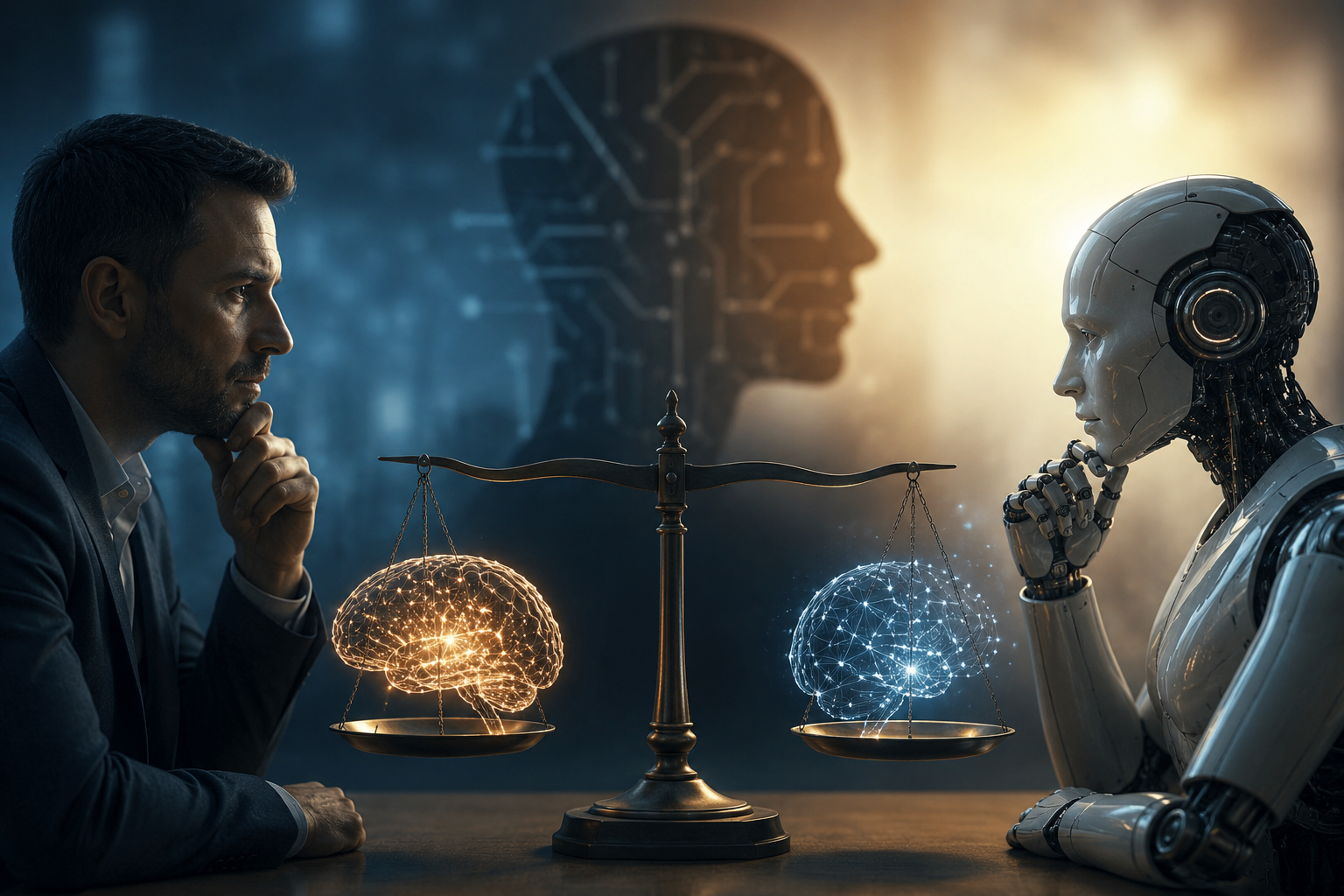
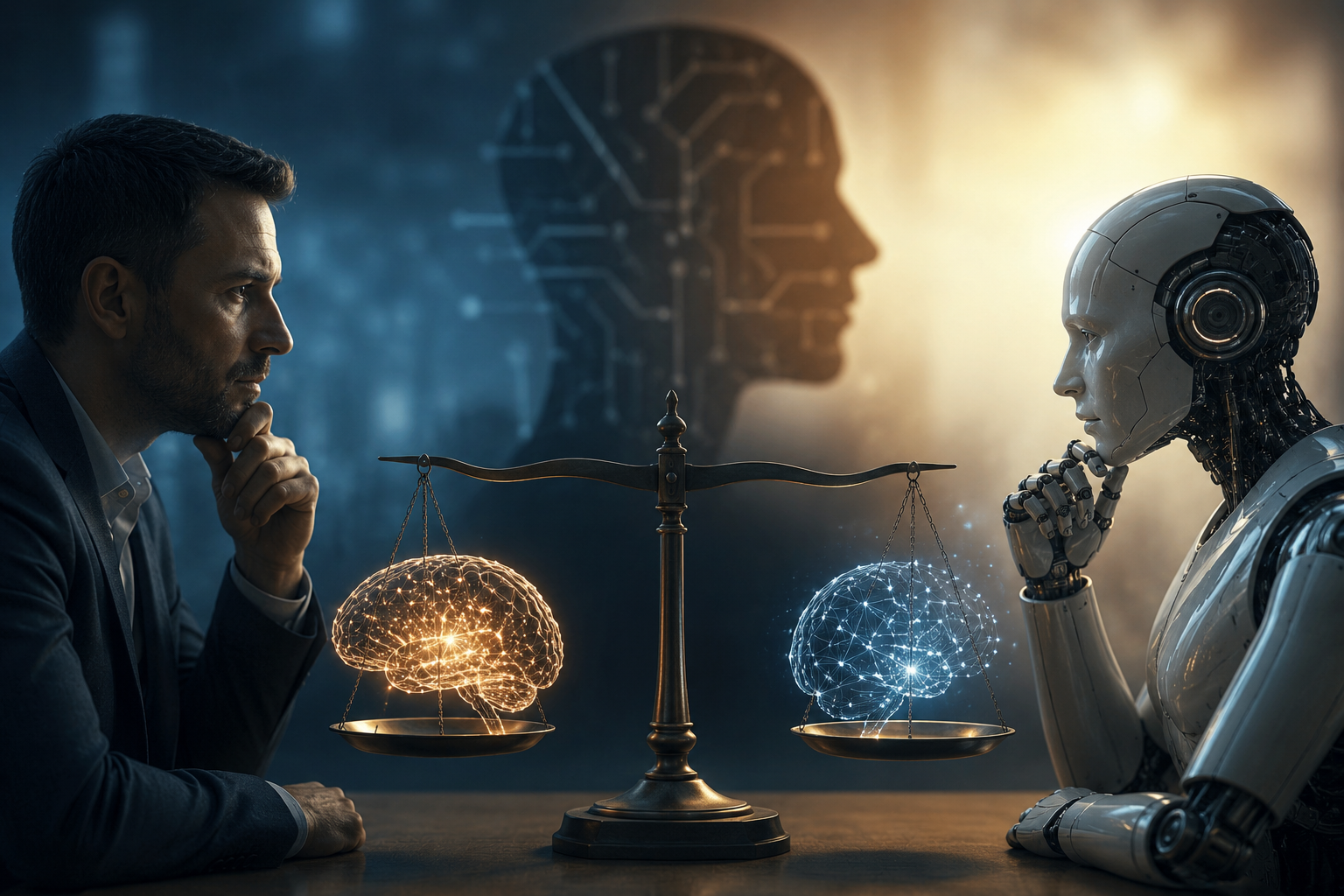
Ethical AI use means a partnership, not a complete delegation. AI can identify patterns invisible to humans, accelerate analysis, and reduce the time needed to make a decision. In return, humans must provide what algorithms cannot guarantee: context, experience, values, responsibility, and discernment.
Organizations should foster a culture where the standard question is not “What does AI say?”, but “Why does AI say this, and is it justified in our context?”
Conclusion
The success of artificial intelligence should not be measured only by the accuracy of its answers, but also by its ability to support human judgment. A mature organization is not one that always follows AI recommendations, but one that knows when to confirm them, when to challenge them, and when to decide differently. AI is an extraordinary tool, but ethics begin when humans remain responsible for the final decision.
(This material was assisted by an AI tool and reviewed by our team before publishing).