


CQ | How DNA-Based Memory Could Make AI 100 Times More Energy Efficient
⚡ Reper CorpQuants: If you remember one thing, let it be this: DNA-based memory could enable AI to use 100 times less energy, reducing costs and environmental impact.
Imagine a future where computers and artificial intelligence become hundreds of times more efficient, using less energy than a light bulb. A new breakthrough that combines synthetic DNA with digital technology promises to radically transform how we store and process data.
What does this mean for the future of AI and for our planet? Let’s find out together.
Why We Need New Solutions for AI and Energy
Artificial intelligence (AI) is becoming increasingly present in our lives: from movie recommendations to voice assistants or medical analysis. But all this intelligence comes at a hidden cost: it consumes a lot of energy.
Data centers—those buildings filled with servers that process data for AI—can use as much electricity as a small city. As AI becomes more complex, the need for energy also increases, which means higher bills and a negative impact on the environment.
What Is DNA-Based Memory and How Does It Work
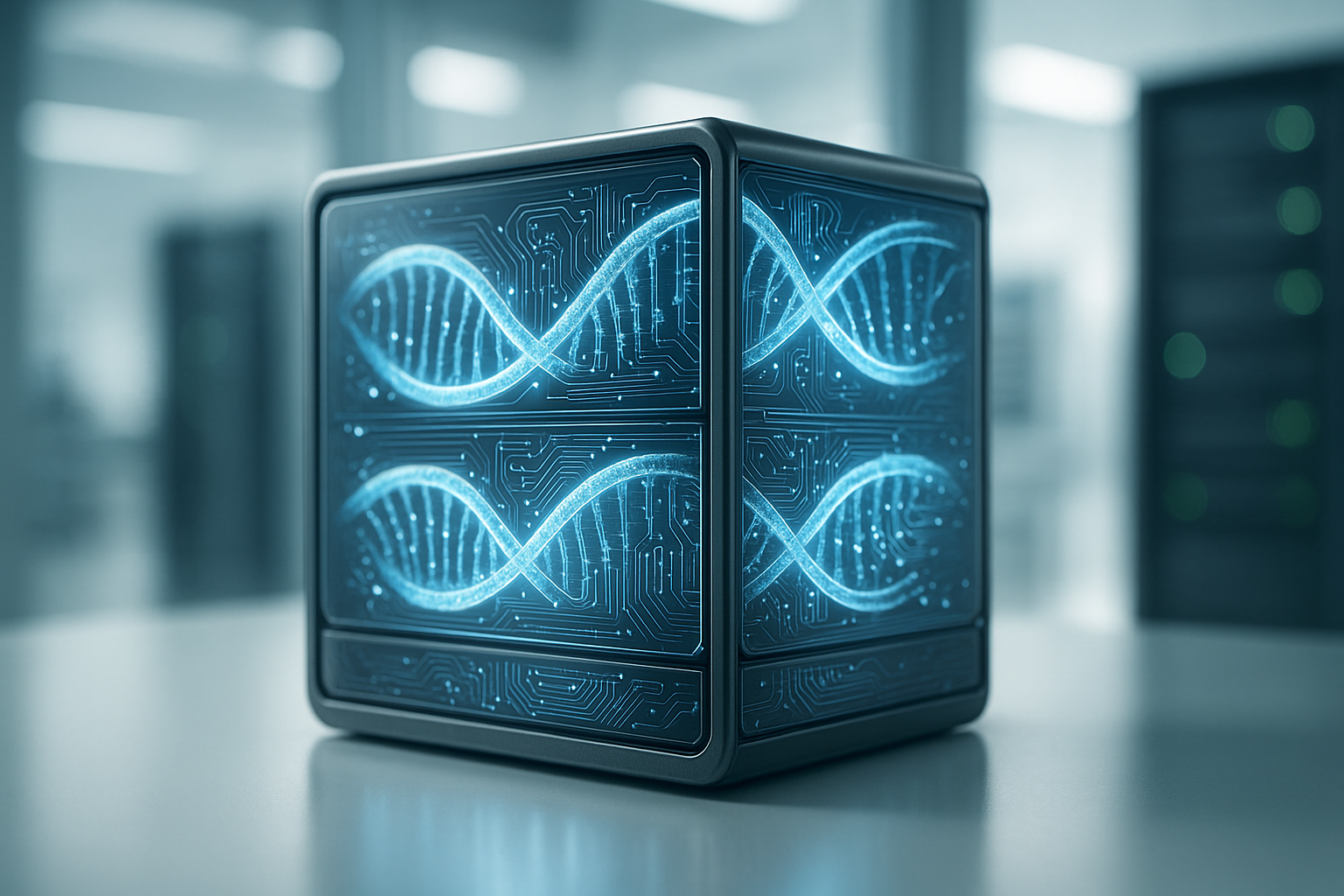
Recently, researchers invented a memory device that combines synthetic DNA (an artificial version of the molecule that stores genetic information in all living beings) with semiconductors (materials used in electronic circuits).
Normally, computers store data in one place (memory) and process it in another (processor). That’s like having your kitchen in one building and your dining room in another—you constantly have to go back and forth, wasting time and energy.
DNA-based memory allows data to be stored and processed in the same place. Basically, data is “written” into DNA molecules, and semiconductors can read and modify this information directly, without moving it from one place to another.
Why This Technology Matters for Everyday People
The main advantage is energy efficiency. Researchers say this technology could make AI up to 100 times more energy efficient than current solutions.
- Lower energy bills: Data centers would consume much less electricity, which could lead to lower costs for digital services, from cloud storage to video streaming.
- A cleaner environment: Less energy consumed means fewer carbon emissions, resulting in a smaller impact on global warming.
- Accessible AI everywhere: AI equipment could become smaller and cheaper, making it available in hospitals, schools, or even our homes, without the need for costly infrastructure.
How This Innovation Could Change the Future of AI and Data Centers
DNA-based technology could completely change how AI systems and data centers are built. Instead of huge halls filled with power-hungry servers, we could have compact, efficient devices processing data locally.
This would open up new opportunities for:
- Advanced automation: Factories, farms, or smart cities using AI without worrying about massive energy consumption.
- Rapid data analysis: Healthcare, education, or scientific research could benefit from fast and accessible AI, even in areas without strong infrastructure.
What’s Next and Why It Matters for All of Us
DNA-based memory isn’t just a science-fiction idea. It’s a real solution, currently in development, that could change the way we use technology every day.
As AI becomes part of our lives, it’s important to find more sustainable and accessible methods for everyone. A technology that reduces energy consumption and costs helps not only our wallets, but also protects the planet.
In the coming years, such innovations could bring AI closer to people, make it more environmentally friendly, and more useful in everyday life.
(This material was assisted by an AI tool and reviewed by our team before publishing).