



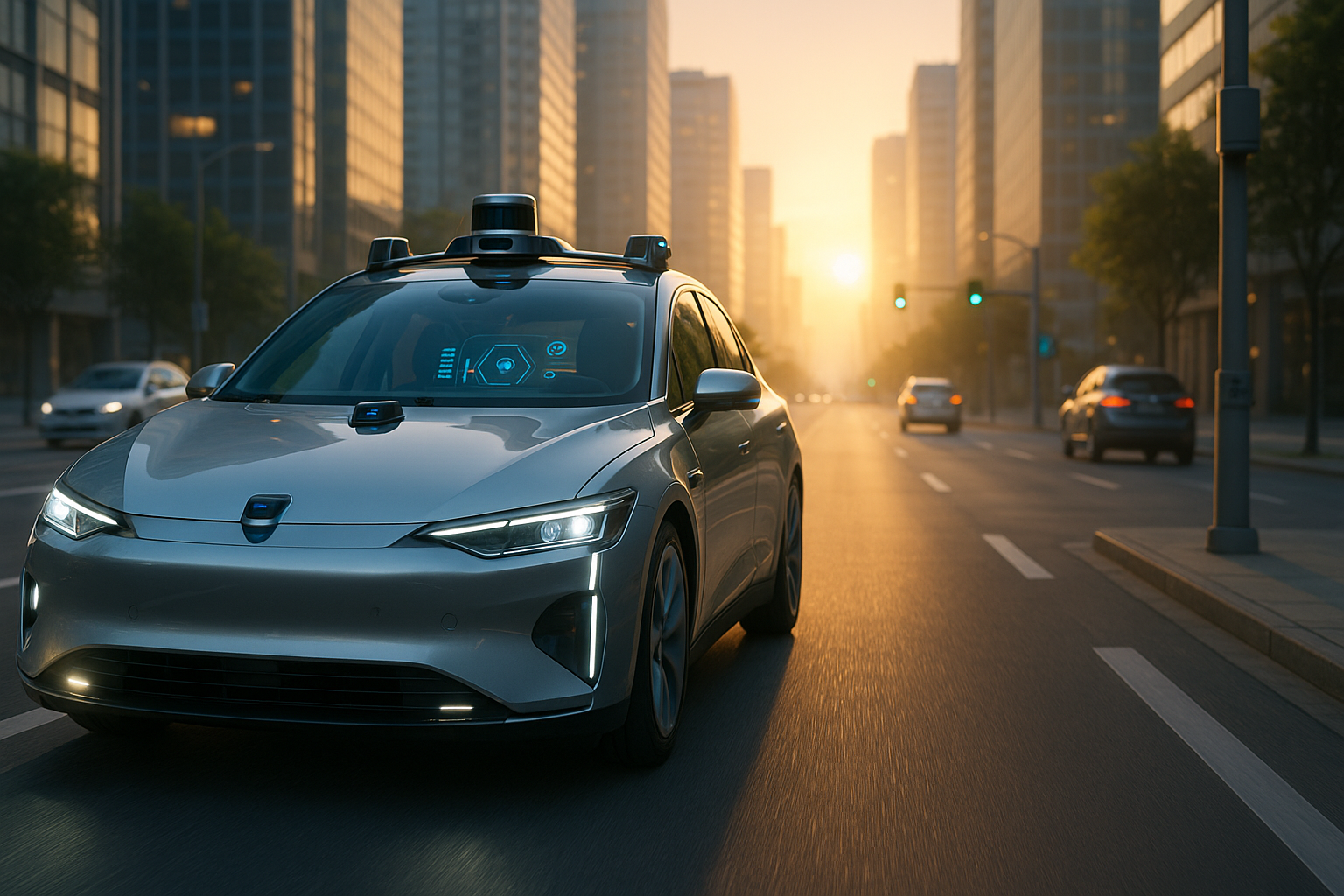
CQ | How Autonomous Cars Learn to Explain Their Decisions: The MIT & Motional Innovation Made Simple
⚡ Reper CorpQuants: If you remember just one thing: autonomous cars become safer and more trustworthy when they can explain, in terms we understand, why they make certain decisions on the road.
Have you ever wondered why an autonomous car suddenly brakes or changes lanes without warning? Until now, the decisions of these vehicles have seemed like a mystery to most of us.
A new innovation from MIT and Motional promises to change the rules of the game, enabling cars to explain every action they take in real time. Let’s see how this technology works and why it matters for our safety and trust.
Why AI Decisions in Autonomous Cars Are Hard to Understand
Autonomous cars use artificial intelligence (AI) to make decisions on the road: when to brake, when to overtake, or how to react to an obstacle. However, for many of us, these decisions seem to come from a “black box”—meaning we don’t know what’s happening inside, nor why the car chose to do a certain thing.
Imagine riding with a friend who’s driving, but they never tell you why they slow down or change direction. Would you feel comfortable? That’s exactly how many people feel when riding in an autonomous car: they don’t know what to expect and can’t ask “why?”.
What Is AI Explainability and Why It Matters
AI explainability means that the system can show us, in understandable terms, why it made a certain decision. Think of a teacher explaining to students how they solved a problem, instead of just giving the final answer.
Why does this matter? Because when we know the reasons behind a decision, we have more trust and feel safer. Plus, if something goes wrong, we can understand what happened and how to avoid it in the future.
How the MIT & Motional System Works: Practical Examples
Researchers at MIT and the company Motional have developed a system that allows the autonomous car to explain, in real time, why it makes a certain decision. Basically, the car can “talk” to passengers or operators in the control center, saying things like:
- “I braked because a pedestrian appeared on the crosswalk.”
- “I changed lanes because the road ahead was blocked.”
- “I slowed down because I detected a cyclist nearby.”
This system uses a combination of sensors (cameras, radars, lidars—that is, lasers that measure distance) and algorithms that quickly analyze what’s happening around. But the novelty is that, in addition to making decisions, the system can also generate a simple explanation, just as if you were asking a human driver “why did you do that?”.
What Does This Innovation Change for Us?
- Greater trust: People feel more at ease when they know why the car acted in a certain way.
- Increased safety: Explanations help quickly identify any possible errors or technical issues.
- Faster adoption: Companies and authorities can analyze and validate the cars’ decisions, speeding up the large-scale introduction of these vehicles.
What This Innovation Means for the Future of Autonomous Transport
As autonomous cars become more common on the roads, it will be essential to know that we can trust them. The explainability system developed by MIT and Motional not only helps us understand the car’s decisions, but could also change the way we view technology in general.
Just as we want to know why a doctor recommends a treatment or why a bank rejects a loan, we also want to know why the autonomous car chose a certain action. This transparency can make the difference between fear and trust, between uncertainty and safety.
The future of autonomous transport is not just about how well the car drives, but also about how well it can explain what it’s doing. And that can bring all of us more peace of mind and safety on the road.
(This material was assisted by an AI tool and reviewed by our team before publishing).