


CQ | How Optical AI Can Detect Deepfakes: The Technology Promising Visual Safety for All
⚡ Reper CorpQuants: Optical AI can quickly and efficiently detect deepfakes, providing companies and everyday people with a powerful weapon against visual manipulation and digital fraud.
Imagine no longer being able to trust what you see online. Deepfakes are becoming more convincing, and the risks for companies and individuals are rising.
But a new technology based on light promises to change the rules of the game: optical AI can quickly and efficiently detect manipulated video content, protecting us from fraud and disinformation.
What Are Deepfakes and Why Should We Be Concerned
Deepfakes are videos or images created with the help of artificial intelligence, which can make a person appear to say or do things they never actually did. Essentially, someone can “put” another person’s face and voice on someone else’s body, in a way so realistic that it’s hard to spot the difference.
This might seem entertaining at first glance, but the risks are enormous. Deepfakes can be used to spread false information, for blackmail, fraud, or to destroy someone’s reputation. Imagine seeing a video of a politician or company executive saying something scandalous—when in fact, the video is completely fake.
How Optical AI Works and What Makes It Special
Until now, most deepfake detection systems have used regular computers, which analyze each video frame, pixel by pixel. This process can be slow and energy-intensive.
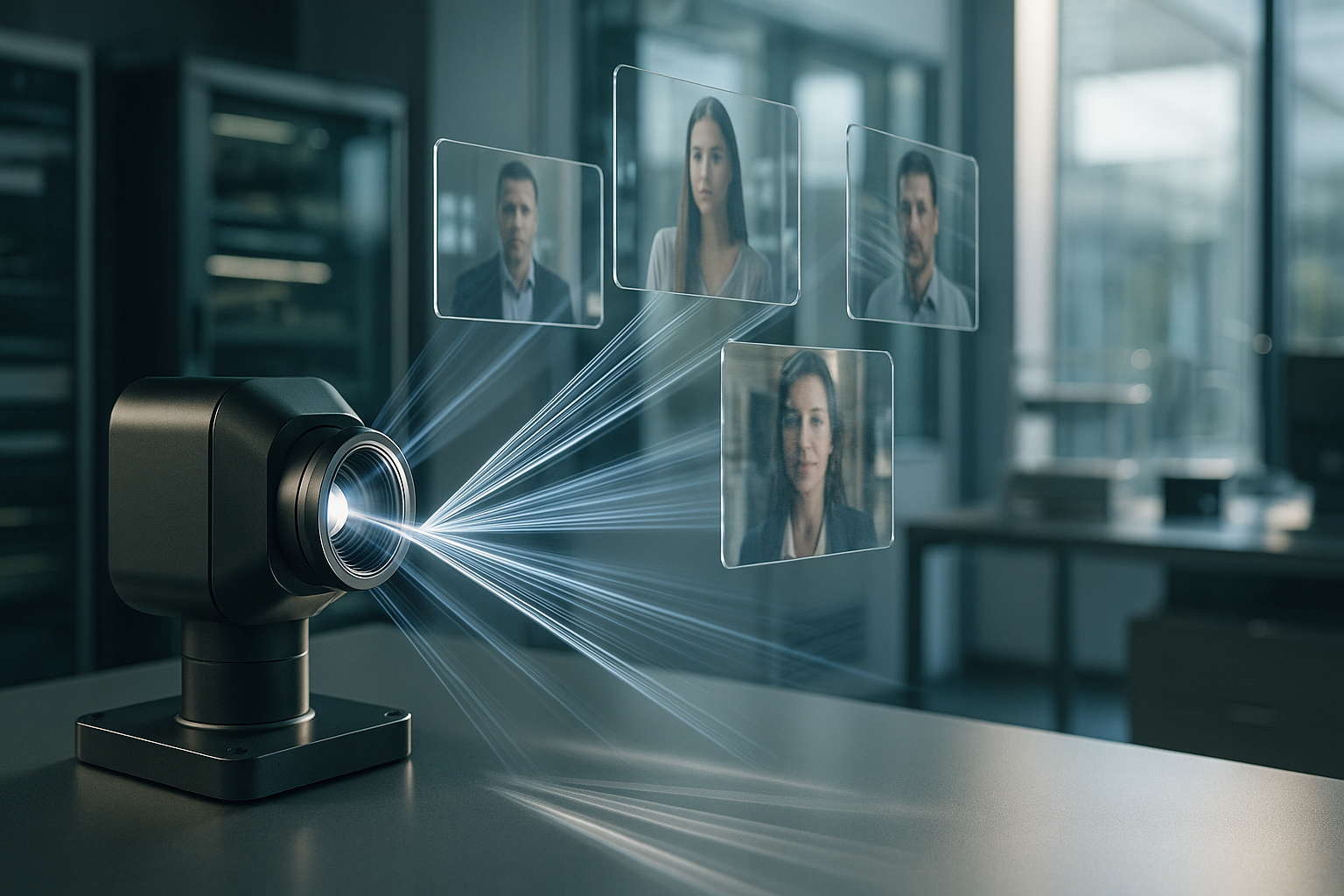
Optical AI, developed by researchers at UCLA, completely changes the approach. Instead of relying solely on electronic circuits, this system uses light (i.e., photons) to analyze images. In practice, optical AI “sees” and processes information at the speed of light, using special components that act like artificial eyes and brains, but made from glass and tiny mirrors.
Another important advantage is its resistance to cyberattacks. Because it processes data “physically,” using light, it is much harder to trick or attack remotely.
Where and How Optical AI Can Be Used
This technology is not just for laboratories or universities. It can have a huge impact in real life, especially for companies and institutions that handle sensitive visual data.
Practical Examples
- Banks and financial institutions: They can verify the authenticity of videos used for client identification, preventing identity fraud.
- Media companies: They can quickly filter out fake or manipulated content before it reaches the public.
- Governments and security agencies: They can detect and block disinformation campaigns that use deepfakes to manipulate public opinion.
- Technology companies: They can offer safer services for video conferencing or online identity verification.
Why This Technology Matters for the Future of Visual Security
We live in a world where images and videos circulate at dizzying speeds. If we can’t trust what we see, the risk of being manipulated or deceived increases dramatically.
Optical AI offers a fast, secure, and efficient solution to protect us from these risks. Not only large companies or governments can benefit, but each of us, as everyday internet users.
(This material was assisted by an AI tool and reviewed by our team before publishing).