



CQ | Advanced AI Without the Cloud: How On-Device Agentic Models Are Changing the Way Companies Use Artificial Intelligence
⚡ Reper CorpQuants: On-device agentic AI models make it possible to automate and protect data directly on a company’s own devices, reducing costs and dependence on the cloud—a major shift for any business.
Imagine being able to use advanced artificial intelligence directly on your office laptop or phone, without relying on the internet or expensive cloud servers. The new on-device agentic AI models make this possible, opening new doors for automation, security, and efficiency in business—all within anyone’s reach, with no technical expertise required.
Until recently, powerful AI was reserved only for large companies with budgets for specialized infrastructure. Today, technology is evolving rapidly, and on-device agentic models promise to democratize access to artificial intelligence for businesses of any size.
What Are On-Device Agentic Models?
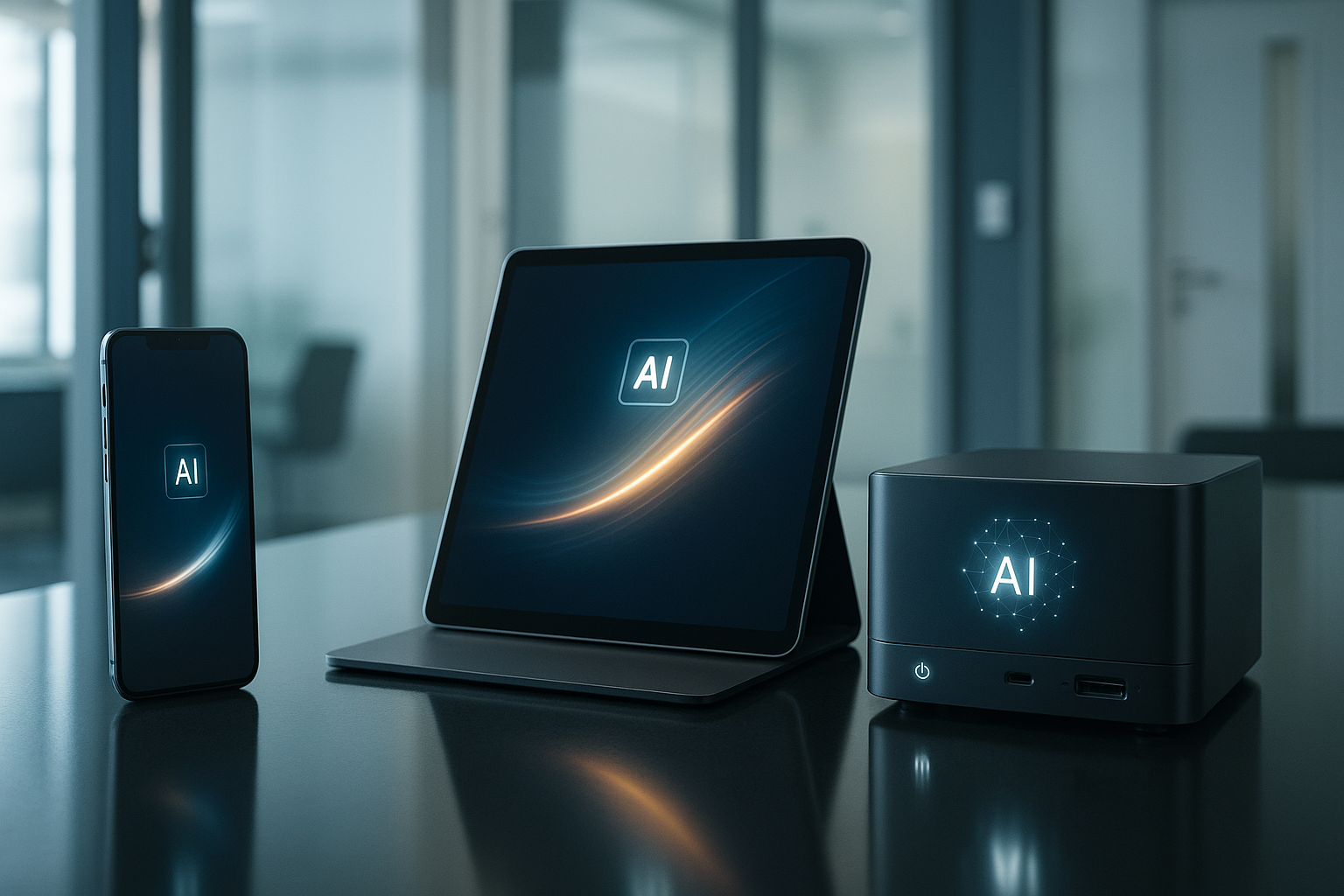
On-device agentic models are artificial intelligence programs that can run directly on ordinary devices, such as laptops, phones, or mini-computers (like Raspberry Pi). “Agentic” means these models can act as intelligent assistants, capable of making decisions and executing multiple steps automatically, without human intervention.
Unlike traditional AI, which requires powerful cloud servers (that is, over the internet), on-device models operate locally. A recent example is Liquid AI’s LFM2.5-2.6B: this model can process complex information, use digital tools, and handle tasks step by step—all without sending data outside the device.
Why Does This Matter for Companies?
1. Privacy and Security
When data no longer leaves the device, the risk of leaks or attacks drops significantly. Sensitive information—from contracts to customer data—remains safe, exactly where it was created.
2. Lower Costs
Without subscriptions to cloud services or dedicated servers, companies can save significant amounts. On-device models can run on affordable hardware, with no additional investment in IT infrastructure.
3. Autonomy and Speed
The lack of dependence on the internet or external servers means AI works anytime, even in areas without connectivity. Responses are faster, and processes aren’t interrupted by network issues.
Practical Applications: How On-Device AI Helps Businesses
- Automating Repetitive Processes: Agentic models can take over administrative tasks such as filling out forms, generating reports, or sorting documents, directly on the employee’s computer.
- Tool Calling: The AI can “call” (use) other programs on the device, such as sending emails, updating calendars, or accessing local databases, without relying on external applications.
- Multi-Step Execution: Agentic models can follow complex, step-by-step instructions without supervision. For example, they can take a client request, check inventory, generate an offer, and send the response—all automated and local.
What’s Next and Why It Matters for Managers
On-device agentic models represent a paradigm shift: AI is becoming more accessible, safer, and cheaper for everyone. Managers who adopt this technology can quickly automate processes, better protect data, and reduce operational costs.
As these models become more powerful, we can expect an explosion of new applications, from personal assistants to workflow optimization in any field. For companies, this means more control, fewer privacy concerns, and increased efficiency—all directly on the devices they already use.
(This material was assisted by an AI tool and reviewed by our team before publishing).