



CQ | Warehouse Automation: The Four AI Levels Transforming Logistics
⚡ Reper CorpQuants: Understanding the four levels of AI automation in warehouses allows you to anticipate major changes in logistics and adapt your strategies to remain competitive in a sector undergoing rapid digital transformation.
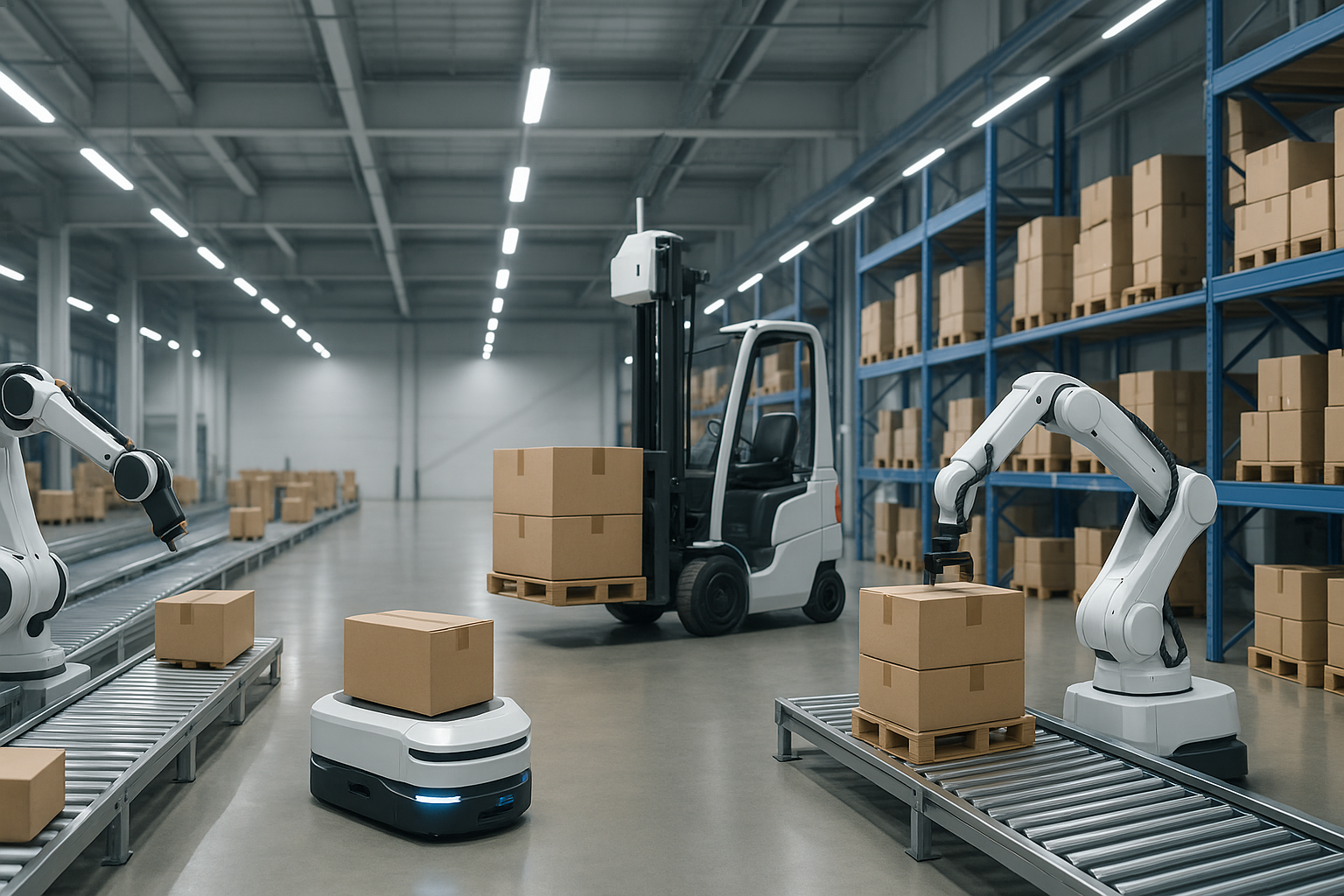
Artificial intelligence is no longer just an experiment in logistics: modern warehouses are rapidly shifting from point solutions to fully autonomous systems. Gartner has identified four essential levels of AI automation that are rewriting the rules of efficiency and competitiveness in the industry.
In an increasingly dynamic market, AI implementations are no longer just pilot projects, but are quickly becoming large-scale operational standards. For logistics professionals and managers, understanding these levels of AI maturity is essential for making informed strategic decisions and anticipating future skill requirements.
Why AI Automation Is Becoming Essential in Logistics
The logistics market is under constant pressure to deliver faster, more efficiently, and at lower costs. The growing volume of orders, the complexity of supply chains, and labor shortages have accelerated the need for intelligent technologies. AI-based automation is no longer just an option—it is rapidly becoming a competitive differentiator for companies aiming to stay relevant.
Context and Current Trends: The Four Levels of AI Automation According to Gartner
Gartner has defined four operational levels of AI automation in warehouses, reflecting the degree of integration and autonomy of the technology:
- Level 1 AI – Point Solutions: Isolated implementations, such as image recognition systems for barcode scanning or route optimization for individual robots.
- Level 2 AI – Integrated Automation: Solutions that connect multiple processes, such as coordination between automated picking and sorting, using machine learning algorithms.
- Level 3 AI – Autonomous Orchestration: Platforms that manage complex processes in real time, reallocating resources and dynamically adapting to changes in volume or priorities without human intervention.
- Level 4 AI – Fully Autonomous Warehouse: Systems that operate the entire warehouse without human supervision, including decisions on procurement, storage, picking, and shipping, all based on data and AI predictions.
These levels are not just theoretical: more and more companies are moving from pilot projects to level 2 or 3 implementations, while industry leaders are already targeting level 4 in the near future.
Practical Implications: Efficiency, Costs, and New Skills for Professionals
Increased Operational Efficiency
AI automation enables error reduction, faster processing, and optimized resource utilization. For example, AI algorithms can anticipate peak activity periods and automatically reallocate workforce or robots, avoiding bottlenecks and delays.
Cost Reduction
Implementing AI brings significant long-term savings by reducing personnel costs, minimizing losses, and optimizing inventory. Even though the initial investment can be considerable, the ROI is rapid, especially at automation levels 3 and 4.
New Skills for Professionals
As warehouses become increasingly autonomous, the role of logistics professionals is evolving. Skills in data analysis, AI systems management, and technological risk management are now required. Continuous training and adaptation to new technologies are essential for careers in the field.
Conclusion: How to Prepare for the Future of Warehouse Automation
AI automation in warehouses is no longer a distant option, but a rapidly expanding reality. Understanding the four levels of AI maturity, as defined by Gartner, is essential for any company aiming to remain competitive and agile.
- Assess your warehouse’s current level of automation and identify the next steps toward AI integration.
- Invest in developing your team’s digital skills and in partnerships with trusted technology providers.
- Continuously monitor industry developments and adapt your strategy to leverage the opportunities offered by AI.
(This material was assisted by an AI tool and reviewed by our team before publishing).