



CQ | From Ledgers to Intelligence: How AI is Changing Risk Reporting for the Board
⚡ Reper CorpQuants: AI can transform risk reporting from a simple list into a clear and useful tool for decision-makers, helping the board react quickly and knowledgeably to real challenges.
How often do risk reports land on the board’s table only to be ignored or misunderstood? In many companies, these thick documents, full of tables and complicated terms, fail to truly convey what matters.
In the digital age, artificial intelligence (AI) promises to radically change the way risks are communicated and managed at the leadership level. Discover how AI can make the difference between a list of risks and a successful strategy.
Why Risk Reporting Needs a Change
Imagine receiving a long list every month of everything that could go wrong at work, but you don’t know which issue is most urgent or what impact it would have on the company. That’s often what traditional risk reports look like for boards of directors.
The result? Decision-makers can’t quickly identify real dangers, and sometimes essential information gets lost in the shuffle. In a world where change happens overnight, such delays can be costly.
What Is AI in Risk Management and How Does It Work
Artificial intelligence (AI) is, in short, the ability of computer programs to “learn” from data and make decisions or predictions. In risk management, AI can rapidly analyze large volumes of information, finding patterns and signals that humans might miss.
Think of AI as a digital assistant that reads all the reports, emails, and company data, then extracts what truly matters for leadership. Instead of getting a thick file, you receive a clear summary with prioritized risks and concrete recommendations.
- Automation: AI can gather data from multiple sources (sales, IT, HR) without people spending countless hours on this task.
- Aggregation: Information is intelligently grouped so you see the big picture, not just scattered details.
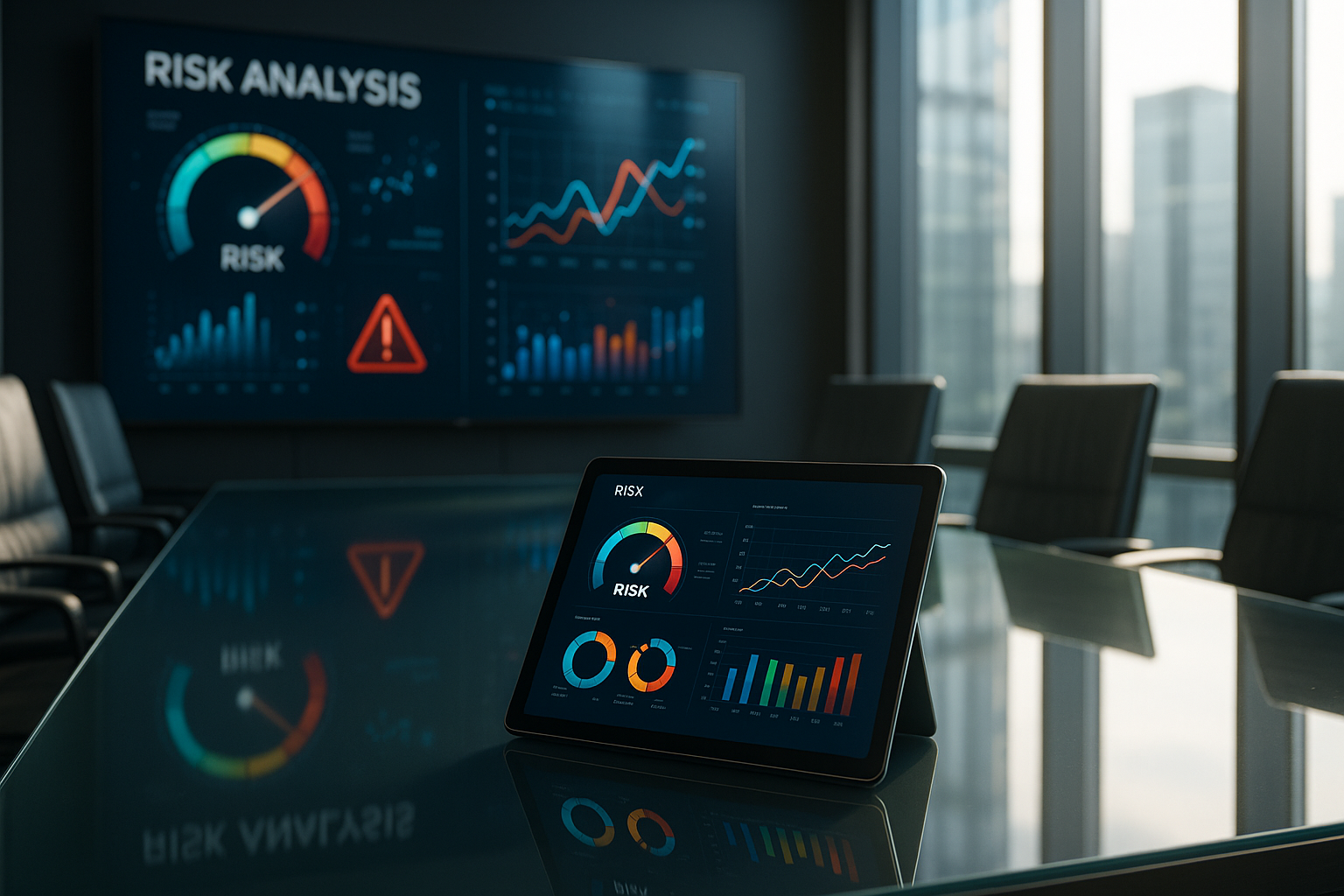
- Visual Presentation: Reports can include simple graphs, colored indicators, or clear alerts that are easy for anyone to understand.
Practical Examples: What Modernized Board Reporting Looks Like
Let’s take a simple example. Previously, the board would receive a table with dozens of risks, each with its own score. Now, with AI, the report might look like this:
- Quick Alert: A short message highlights three risks that have increased significantly in the past month.
- Clear Visualization: A diagram shows which areas of the company are most exposed.
- Recommendations: AI suggests concrete actions, such as “Monitor supplier X” or “Invest in IT security.”
In everyday life, it’s like getting notifications on your phone about bad weather or traffic instead of reading the full, complicated forecast. You get exactly what you need, when you need it.
The Benefits and Next Steps for Informed Leadership
Adopting AI in risk reporting brings clear benefits:
- Increased Visibility: The board quickly sees which risks matter, without wasting time on irrelevant details.
- Informed Decisions: Data is presented clearly, with easy-to-follow recommendations.
- Rapid Response: Emerging risks are flagged immediately, enabling prompt action.
The first step? Acknowledge that old methods no longer suffice. Then, explore digital solutions that deliver the right information, at the right time, to those making the important decisions.
In the end, AI doesn’t replace human experience, but complements it, offering clarity and support where it matters most: in the boardroom.
(This material was assisted by an AI tool and reviewed by our team before publishing).