


CQ | Bio-Hybrid DNA Memory: The Future of Energy Efficiency in AI and Computing
⚡ Reper CorpQuants: Bio-hybrid DNA memory can reduce the energy consumption of AI systems by 100 times, paving the way for a much more efficient and sustainable digital infrastructure.
As artificial intelligence becomes ubiquitous in business and society, the massive energy consumption of digital systems is emerging as a critical issue. A new breakthrough—bio-hybrid DNA memory—promises to reduce energy consumption by a factor of 100, ushering in an era of unprecedented efficiency and sustainability for AI and computing.
What does this innovation mean for the future of technology, and how might it transform digital infrastructure? In the following, we explore the potential of DNA-semiconductor memory technology, its implications for energy efficiency in AI, and the prospects for large-scale implementation.
The Challenge of Energy Efficiency in AI
Artificial intelligence and machine learning have accelerated digital transformation across all sectors, from industry to healthcare, but this revolution comes at a significant energy cost. Data centers, AI training servers, and cloud infrastructure consume enormous amounts of energy, raising concerns about sustainability and operational costs. With the exponential growth of data and the increasing complexity of AI models, finding energy-efficient solutions is becoming essential for the future of technology.
Bio-Hybrid DNA Memory: How It Works and What’s New
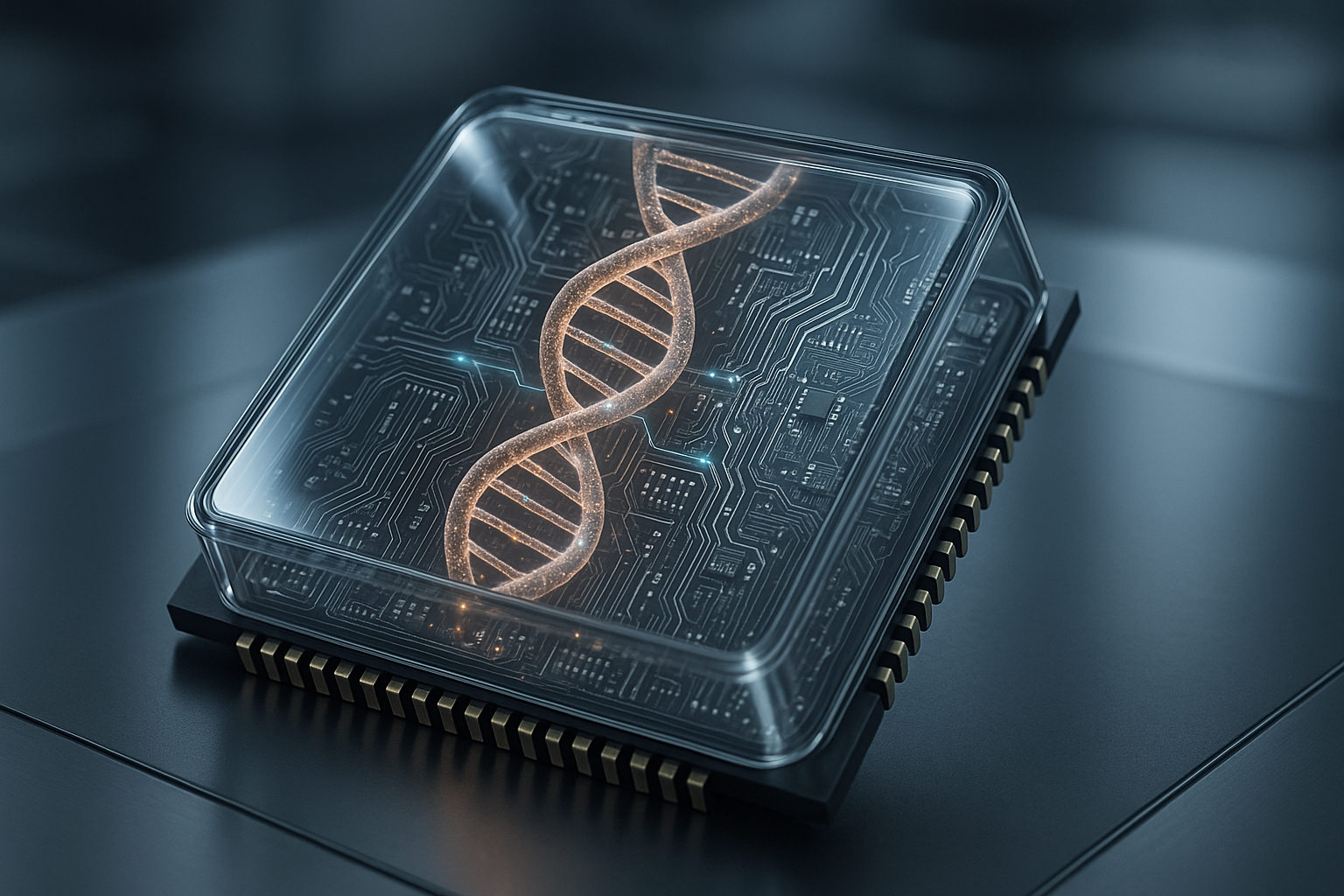
Researchers have recently developed a bio-hybrid memory device that combines synthetic DNA with traditional semiconductors, achieving a 100-fold reduction in energy consumption compared to conventional memory technologies.
Storage and Processing in the Same Place
Unlike traditional architectures, where memory (RAM, SSD) and the processor are separate components, this technology enables information to be stored and processed in the same physical space. This model, inspired by the way the human brain works, eliminates the need for constant data transfer between memory and processor—a process that consumes a lot of energy and generates latency.
- Energy efficiency: Synthetic DNA requires much less energy to store and access data compared to traditional electronic memory.
- Miniaturization and density: The molecular structure of DNA allows for the storage of enormous amounts of information in an extremely small volume.
- Scalability: Integration with semiconductors paves the way for industrial-scale production.
Practical Implications: Transforming Digital Infrastructure and Sustainability
Large-scale implementation of bio-hybrid DNA memory could have a transformative impact on the global digital infrastructure:
- Reduced operational costs: Data centers and AI servers could operate on a fraction of today’s energy requirements, significantly cutting electricity expenses.
- Increased sustainability: Lowering the carbon footprint of digital infrastructure would contribute to environmental goals and corporate social responsibility.
- Enhanced performance: Eliminating data transfer between processor and memory can significantly speed up AI processing, enabling more complex models and faster responses.
Examples of Potential Applications
- Green data centers for cloud and AI
- Edge devices with extended energy autonomy
- AI systems integrated into critical infrastructure or resource-limited areas
Outlook and Challenges for Implementation
Although initial results are promising, large-scale implementation of bio-hybrid DNA memory comes with technical and economic challenges:
- Standardization and integration: Adapting existing infrastructure to work with this new type of memory requires the development of new hardware and software standards.
- Production costs: While synthetic DNA is becoming increasingly accessible, industrial-scale manufacturing of these devices is still in its infancy.
- Reliability and security: Long-term testing of the stability and security of data stored on bio-hybrid media is essential for commercial adoption.
What’s Next?
As the pressure for energy efficiency and sustainability increases, bio-hybrid DNA memory could quickly become an essential component of future AI and computing infrastructure. For professionals and managers in AI/ML, monitoring the evolution of this technology may provide competitive advantages and opportunities for strategic innovation.
(This material was assisted by an AI tool and reviewed by our team before publishing).