



CQ | MIT’s Revolutionary Lidar Chip: How It Will Transform Perception and Safety in Autonomous Vehicles
⚡ Reper CorpQuants: MIT’s new lidar chip eliminates moving parts, reduces interference, and expands the field of view, paving the way for safer, more accessible, and smarter autonomous vehicles—an essential leap for AI integration in transportation.
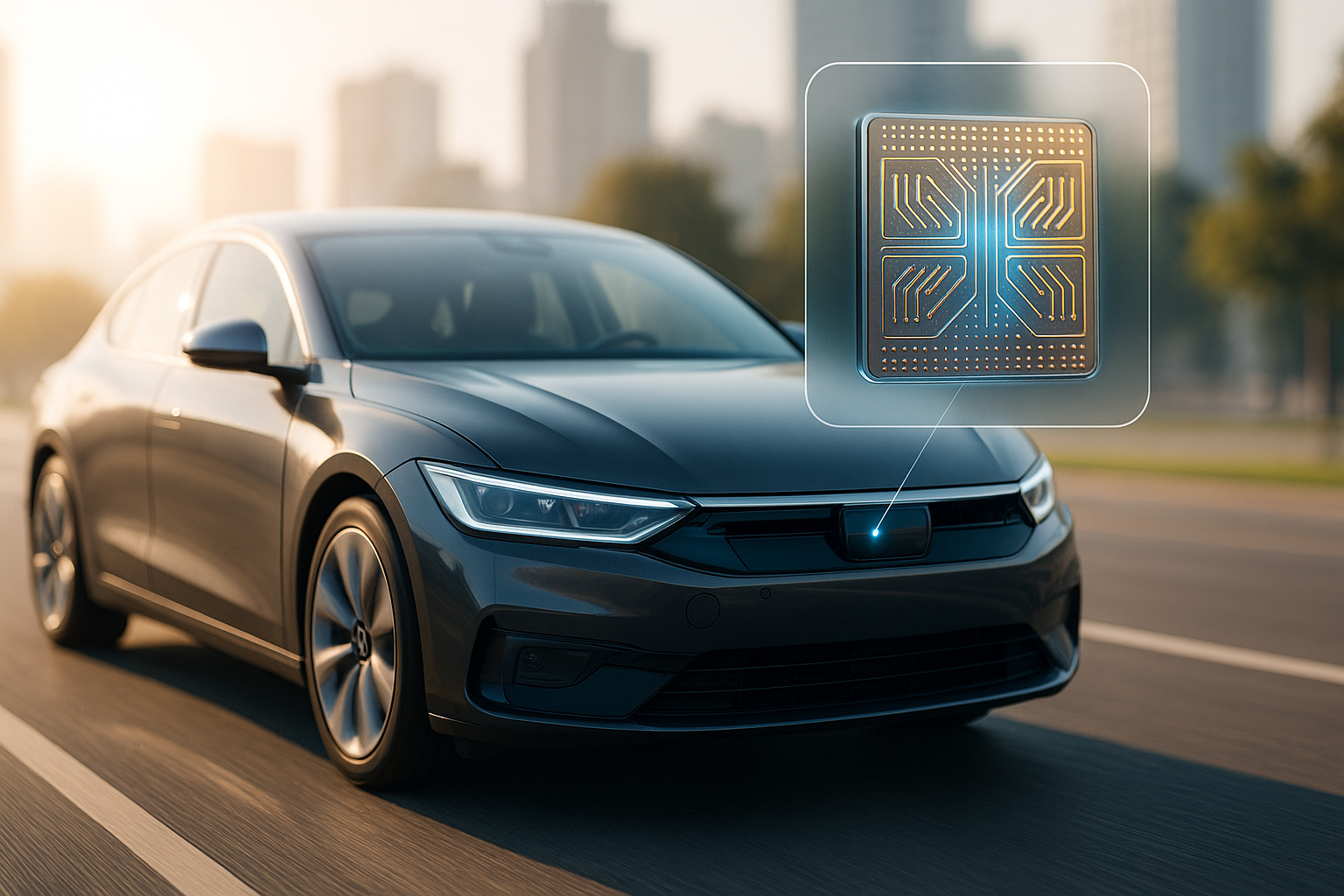
With the development of a solid-state lidar chip, researchers at MIT are paving the way for a new era of autonomous vehicles. This innovation promises not only to significantly reduce costs and hardware complexity, but also to improve reliability and real-time perception accuracy—critical elements for transportation safety and the widespread adoption of AI technologies in the industry.
In the context of a rapidly transforming automotive market, where autonomy and artificial intelligence are becoming central pillars, perception hardware plays a decisive role. The new lidar chip developed at MIT could represent exactly the missing link for scaling and democratizing autonomous vehicles, providing competitive advantages for both developers and end users.
The Importance of Perception for Autonomous Vehicles
In the ecosystem of autonomous vehicles, environmental perception is the foundation of any analysis and decision-making process. Without precise information about obstacles, pedestrians, or other vehicles, no autonomous driving algorithm can operate safely. Lidar (Light Detection and Ranging) is one of the most widely used technologies for three-dimensional environmental mapping, providing essential data for AI and control systems.
However, the reliability and efficiency of these systems directly depend on hardware quality. The current limitations of lidar technologies—from high costs and bulky sizes to sensitivity to interference and mechanical wear—are major obstacles to the widespread adoption of autonomous vehicles.
Limitations of Traditional Lidar and the MIT Solution
Classic lidar typically operates with moving parts that scan the environment, emitting laser pulses and measuring their return time to reconstruct a 3D map. While effective, this mechanism brings wear-and-tear issues, maintenance needs, and high costs, as well as the risk of interference between multiple lidar systems operating nearby.
Through this innovative architecture, the MIT chip offers a much wider field of view and increased resistance to optical noise generated by other nearby lidar systems. Moreover, integration on a compact chip reduces size and production costs, facilitating implementation in mass-market vehicles.
Benefits for Industry, AI, and Real-Time Decision Making
- Increased reliability: Eliminating moving parts significantly reduces the risk of failures and the need for maintenance—a vital aspect for autonomous fleets and industrial applications.
- Lower costs: Large-scale production of the chip allows for a lower final price, opening access to market segments that previously could not afford advanced lidar technologies.
- Speed and accuracy: The chip can process data quickly, providing AI with high-resolution, real-time information—essential for fast and safe traffic decisions.
- Scalability and easy integration: The small size and compatibility with other electronic components make this chip an ideal solution for integration into various platforms, from passenger cars to industrial robots.
The impact on the automotive industry is significant: manufacturers can reduce development costs, increase safety, and accelerate the launch of autonomous vehicles to market. At the same time, AI software companies benefit from more reliable data for training and running machine learning models, optimizing real-time analysis and decision-making processes.
What’s Next for AI Hardware and Autonomous Transport?
MIT’s new lidar chip is a compelling example of convergence between hardware innovation and the increasingly complex needs of modern AI. As demand for autonomous vehicles grows, such solutions become essential for overcoming the technical and economic barriers of the industry.
The transformation of perception hardware, as proposed by MIT, will accelerate not only the adoption of autonomous vehicles but also the evolution of the entire AI/ML ecosystem, providing the foundation for faster, safer, and more efficient real-world decision-making.
(This material was assisted by an AI tool and reviewed by our team before publishing).