


CQ | How AI Helps Us Unravel the Mysteries of the Brain: Practical Lessons for Everyone
⚡ Reper CorpQuants: The integration of AI into scientific discoveries, such as brain mapping, is changing the way we analyze complex data and opening new opportunities for innovation and decision-making in business, education, and information management.
Have you ever wondered how researchers manage to understand such a complex organ as the human brain? With the help of artificial intelligence, deciphering these mysteries is more accessible than ever before.
Google offers an interactive lesson that demonstrates, step by step, how AI can map the brain and what we can learn from this experience, regardless of our field of work. But beyond scientific fascination, these technologies bring practical lessons for any business or organization that wants to understand and leverage complex data.
What does brain mapping with AI mean?
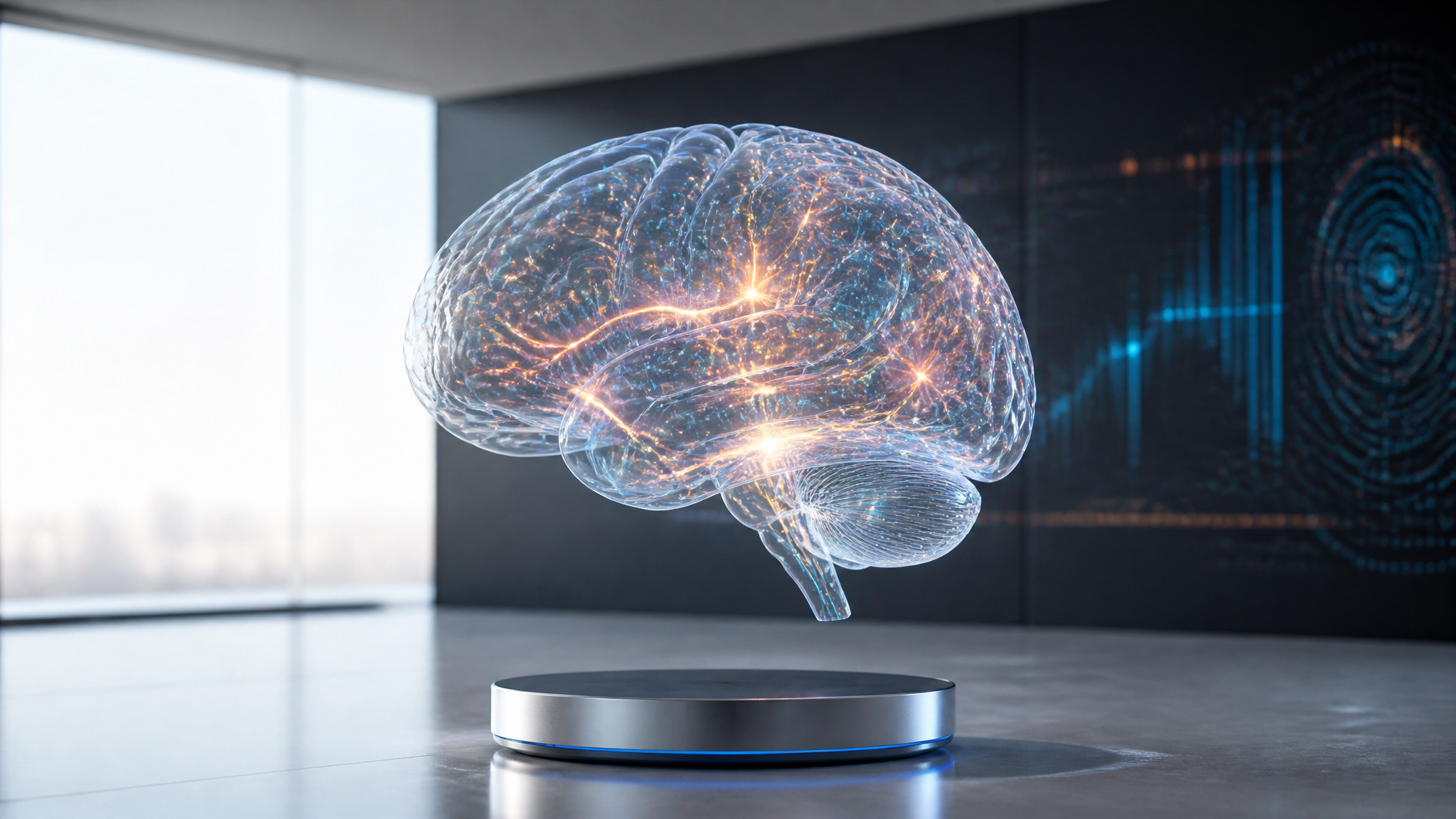
In short, brain mapping means creating a detailed “map” of how the cells and regions in the brain are connected. It’s like trying to map all the streets, intersections, and traffic lights in a huge city, but at a microscopic level.
Until recently, this was almost impossible. The brain contains billions of cells, and the connections between them are more numerous than the stars in the galaxy. This is where artificial intelligence (AI) comes in, specifically the branch called “machine learning,” which helps computers recognize patterns and analyze huge amounts of data much faster than any human could.
Why does it matter to all of us?
It may seem like a scientific curiosity, but the way AI assists in brain mapping shows us how we can approach any problem with many unknowns and hard-to-handle data. In business, the data might be sales, customer behavior, or internal processes. In education, it could be student results or skill development.
By using AI to “map” this data, companies and institutions can uncover hidden patterns, anticipate problems, and make more informed decisions. Just as researchers find connections between neurons, managers can discover links between causes and effects within their own organizations.
The Google Lesson: A Practical Example and What We Can Learn
Google recently launched an interactive lesson, part of the AI Quests series, where anyone can see how AI analyzes real images of the human brain. The lesson doesn’t require advanced knowledge but explains step by step how brain structures are identified and classified with the help of algorithms.
This approach has several clear benefits for business and education:
- Visualization and analysis: Complex data becomes easier to understand when presented visually, not just as tables or long texts.
- Automation: Repetitive or otherwise impossible tasks (such as analyzing millions of images) can be handled by AI, freeing up time for creative activities or strategic decisions.
- Accelerated learning: Interactive lessons help people grasp difficult concepts, which can also be applied in employee training or onboarding.
What practical lessons can we draw?
- Cross-disciplinary collaboration – Mapping the brain with AI was only possible through collaboration between computer scientists, biologists, and data specialists. This model can be applied in business as well, where mixed teams can find innovative solutions to complex problems.
- Approaching data as a “map” – Whether we’re talking about medical, financial, or educational data, AI helps us see the big picture and not miss important details.
- Continuous learning – Interactive lessons like Google’s show that anyone can learn the basics of AI, and this skill is becoming increasingly valuable in any field.
Conclusion: How can we use these innovations in everyday life?
Discoveries in neuroscience, enabled by AI, don’t stop at laboratories or universities. They show us that, whether we work in a company, in education, or in administration, we can use the same principles to understand and manage complex data.
By using interactive tools and science-inspired approaches, we can make better decisions, reduce risks, and innovate more quickly. The Google lesson is not just a technological demonstration, but also an invitation to think differently about data, processes, and collaboration.
(This material was assisted by an AI tool and reviewed by our team before publishing).