


CQ | Who Will AI Replace?
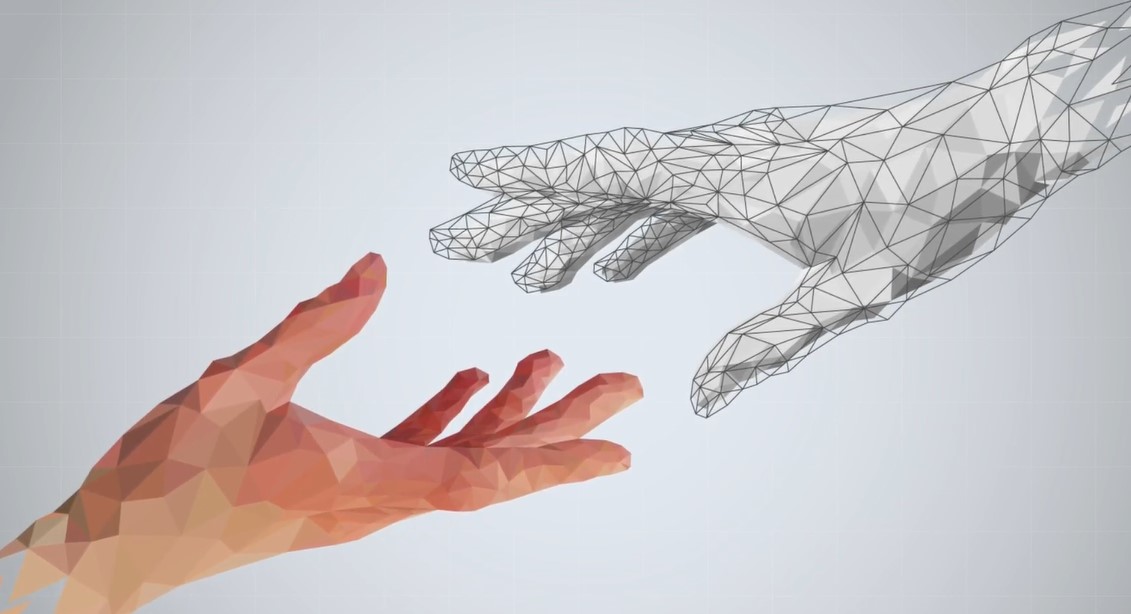
⚡ Reper CorpQuants: AI does not replace people. AI amplifies people. The difference will not be made by access to AI, but by the ability to use it intelligently to turn information into decisions and results.
In recent years, I have heard the same question hundreds of times: “Will AI take our jobs?”
Alarmist headlines, spectacular demonstrations of new models, and the speed at which technology evolves all seem to suggest that we are facing an unprecedented revolution. But what if the question is wrong?
Perhaps the real question is not whether AI will replace people, but: how will the value people bring change in a world where AI becomes omnipresent?
From Physical Strength to Intellectual Power
Every time a revolutionary technology has emerged, similar fears have existed. The industrial revolution did not eliminate the need for people. It changed the type of work. Computers did not eliminate accountants. They eliminated manual calculations. The internet did not eliminate companies. It changed the way they operate.
Today, we are witnessing the same transformation, but in a much more sensitive area: intellectual activities. AI can draft texts, analyze documents, generate code, create images, synthesize information, and answer complex questions in seconds.
Impressive? Without a doubt. Enough to completely replace people? No.
What AI Can Do and What Remains Human
What AI does very well
Artificial intelligence excels at activities such as: processing huge volumes of information; identifying patterns and correlations; automating repetitive tasks; quickly generating options and alternatives; summarizing and structuring information.
Practically, AI is an extraordinary productivity multiplier. An analyst can evaluate more companies in a day. A programmer can write more code. A marketing specialist can generate dozens of campaign variants. A trainer can create materials in a fraction of the time previously required.
But here comes an important observation: AI produces results. People make decisions. And between the two, there is a fundamental difference.
Judgment remains human
- In business environments, there are rarely perfect answers. There are trade-offs. There are risks. There is incomplete information. There are consequences. An AI model can estimate the probability that a client will default. But who decides whether that client receives financing or not?
- A model can generate a strategic plan. But who takes responsibility for implementing it?
- A system can identify hundreds of risks. But who decides which of them should be prioritized?
In all these situations, the decisive factor remains the human. Because decisions are not just about information. They involve context, experience, responsibility, and accountability.
Empathy cannot be automated
There is another dimension that is often ignored in discussions about AI. People do not just seek answers. They seek trust. A client can receive information from a chatbot. But when an important decision needs to be made, they look for an expert. An employee can receive automatically generated instructions. But in a difficult situation, they will look for a leader. A course participant can receive AI-generated content. But inspiration and motivation come from people.
Empathy, influence, leadership, and interpersonal relationships remain profoundly human advantages. And these will become even more valuable as AI spreads.
Value shifts to what is hard to automate
As AI takes over repetitive activities, professional value shifts towards: Critical thinking, The ability to ask the right questions.
Creativity
Generating new ideas, not just combining existing ones.
- Solving complex problems. Situations without obvious answers.
- Communication. Turning information into action.
- Leadership. Mobilizing people around a common direction.
- Professional judgment. Making decisions under uncertainty.
These skills are not becoming less important. What becomes more important is the difference between those who have them and those who do not.
The Great Shift: From Executor to Orchestrator
The great shift: from executor to orchestrator
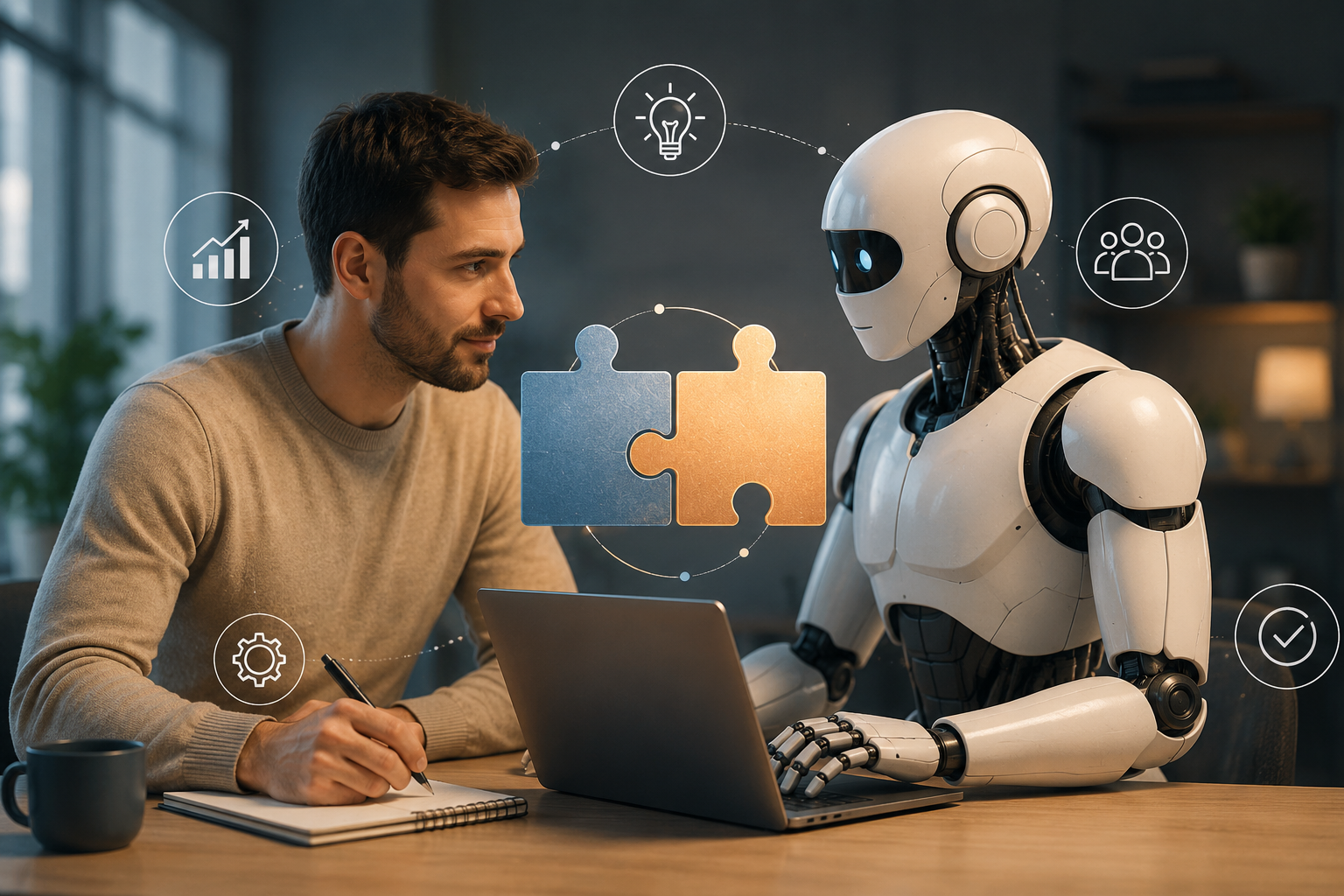
Perhaps the biggest transformation brought by AI is the change in the human role. In the past, many professions were evaluated based on how well they executed a task. In the future, competitive advantage will come from the ability to coordinate and intelligently use AI systems.
High-performing professionals will not compete with AI. They will work together with it. They will know: what to ask for; what to check; what to accept; what to reject; how to combine human expertise with the power of algorithms.
This is the difference between using AI and strategically leveraging AI. Who is truly at risk? Not all jobs are threatened to the same extent.
The most exposed are activities that are: repetitive; based on fixed rules; standardized; with a low degree of professional judgment.
However, even in these cases, the role often does not disappear. Its content changes. History shows us that technology eliminates certain tasks faster than it eliminates entire professions. Instead, it creates new roles, new processes, and new opportunities. This is exactly what is starting to happen with AI.
⚠️ Practical Reper
The useful question is not: “Can AI replace me?”
The useful question is: “How can I use AI to become 2 times, 5 times, or 10 times more valuable in what I do?”
This change in perspective can make the difference between being affected by transformation and benefiting from it.
Conclusion
AI does not represent the end of human work. It marks the beginning of a new stage in which people and technology collaborate more closely than ever. Those who will succeed will not be those who ignore AI, nor those who rely exclusively on it. They will be those who understand how to combine the speed and analytical capabilities of artificial intelligence with what remains profoundly human: creativity, judgment, empathy, and leadership.
In the end, it is very likely that AI will not replace people. But it will radically change the definition of a high-performing professional. And in the new economy, the advantage will not belong to those who work more. It will belong to those who learn to work smart together with AI.
(This material was assisted by an AI tool and reviewed by our team before publishing).