


CQ | How Robots Learn New Tasks from a Single Demonstration: The GEN-1.5 Revolution Explained Simply
⚡ Reper CorpQuants: GEN-1.5 enables robots to quickly learn new tasks from a short demonstration, making automation accessible and adaptable for everyone.
Imagine showing a robot how to clear a table or sort packages—and after just a few seconds, it knows exactly what to do. No coding, no weeks of training needed.
A new generation of AI, called GEN-1.5, promises to turn this vision into reality, making automation more accessible than ever. But what does this innovation actually mean for everyday life and for businesses?
Why Fast and Easy Robot Learning Matters
Robots have become increasingly present in factories, warehouses, and even some homes. However, until now, teaching them to do something new was complicated. Usually, it required programmers or many hours of training with repeated examples.
This process was like trying to teach someone to cook a new recipe, but you’d have to repeat the steps dozens of times, each time with small adjustments. Obviously, this isn’t efficient or accessible for everyone.
What is GEN-1.5 and How Does Learning from Demonstrations Work?
GEN-1.5 is an artificial intelligence (AI) model specifically designed for robots. What makes it different? It can learn a new task from a very short demonstration, just 3 to 12 seconds long. No additional programming or complicated adjustments are needed afterwards.
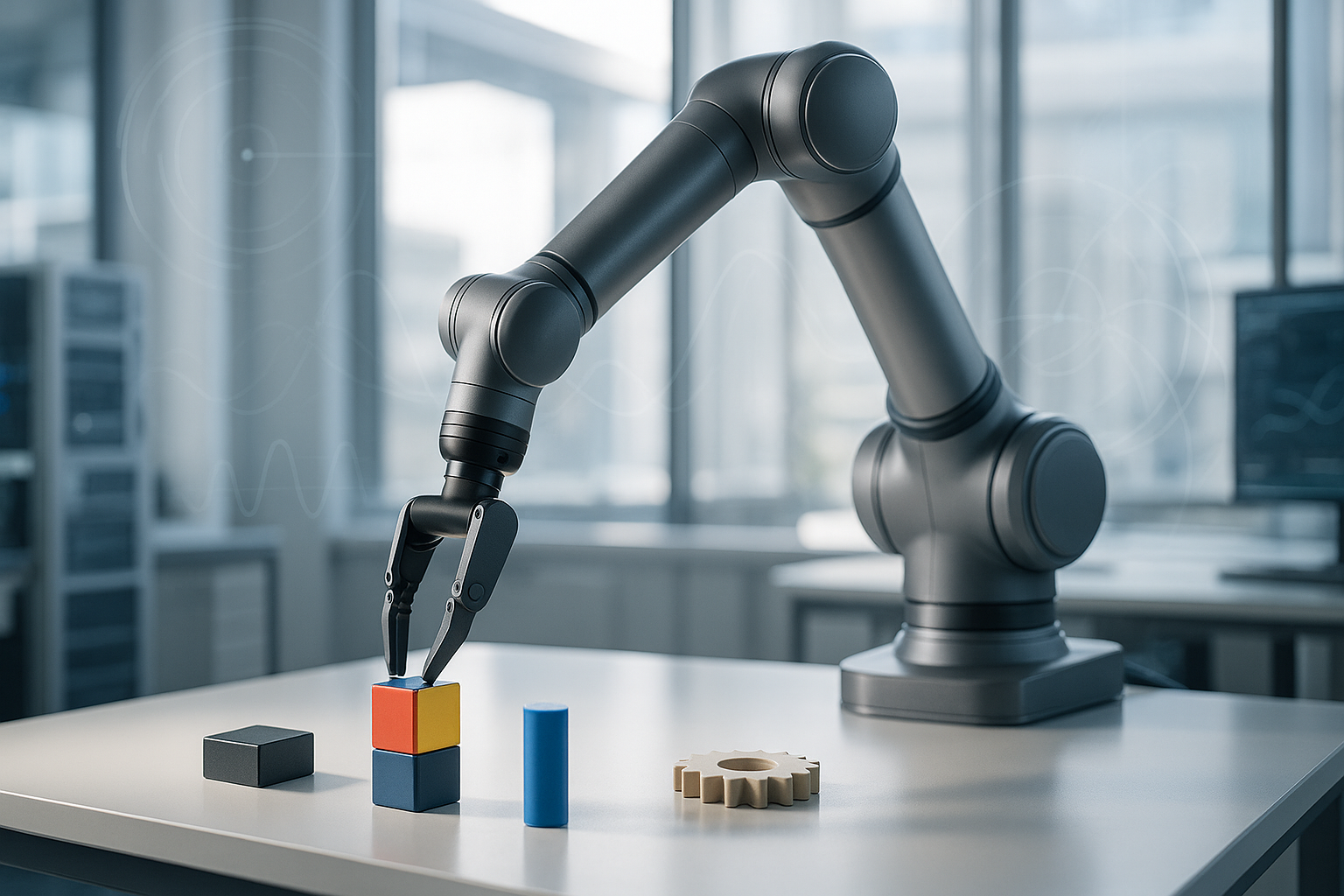
Imagine showing the robot exactly how to move a cup from the table to a shelf. It “watches” this demonstration, and then can repeat the action—even if the table or the cup looks a bit different next time.
This allows it to “generalize,” meaning it can apply what it has learned to new situations without having to start from scratch for every small change.
Practical Examples: How GEN-1.5 Can Be Used in Real Life and Business
In Industry and Logistics
- Package sorting: An employee shows the robot how to place boxes on shelves. After a single demonstration, the robot can take over the task, even if the packages are different shapes or colors.
- Quick assembly: In a factory, GEN-1.5 can learn to assemble a new part just by watching a short demonstration, with no need for costly reprogramming.
In Everyday Life
- Clearing the table: You show the robot how to gather plates and cutlery, and it can repeat the action, even if the arrangement changes from day to day.
- Home care: GEN-1.5 can learn to water plants or organize objects from just a short demonstration.
What This Revolution Means for the Future of Automation
GEN-1.5 opens the door to a world where robots can be adapted to new tasks almost instantly, without relying on experts or lengthy configuration processes.
This means that both small and large businesses can more easily use robots to streamline their operations, and ordinary people can benefit from robotic assistance without the hassle.
In practice, GEN-1.5 brings us closer to the moment when robots can learn from us as easily as a new colleague learns on the job. One demonstration and that’s it!
(This material was assisted by an AI tool and reviewed by our team before publishing).